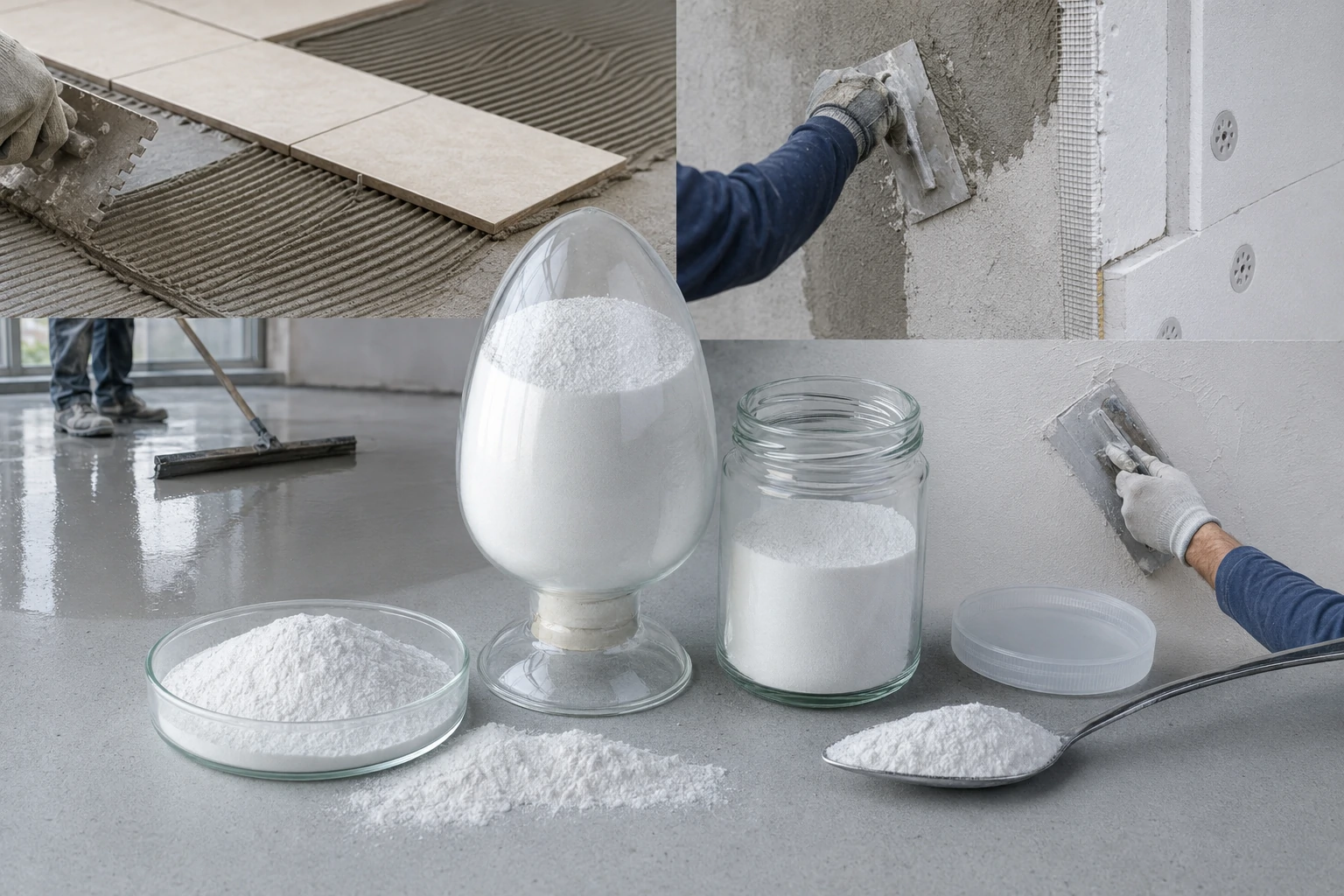

















Putty powder is widely used in wall leveling, surface repair, interior and exterior wall finishing, and decorative coating systems. For manufacturers of dry mix building materials, stable putty performance is very important because it directly affects construction efficiency, surface smoothness, bonding strength, and long-term wall durability.
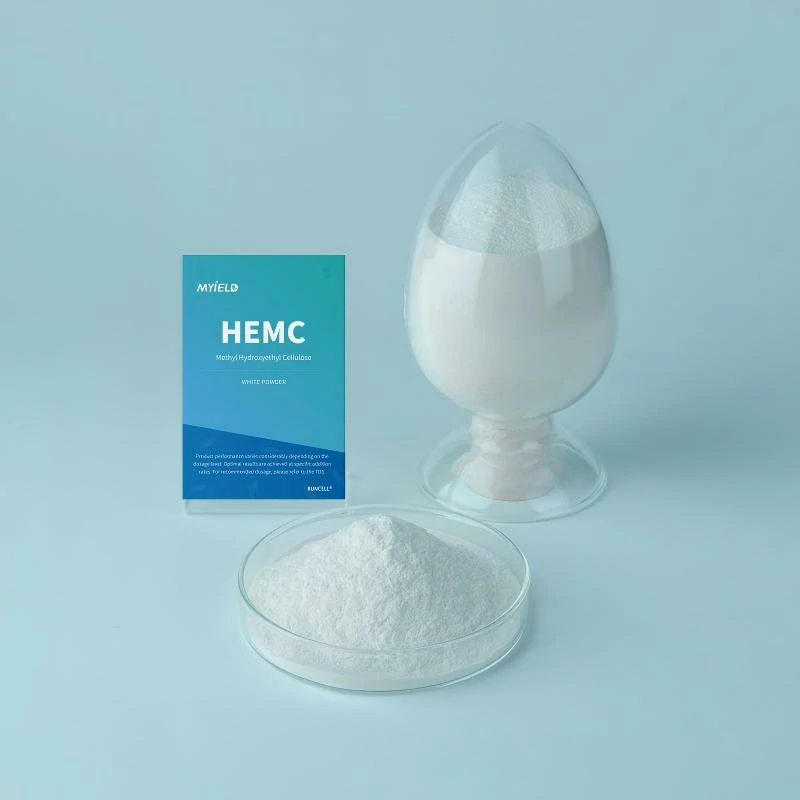
Among different additives used in putty powder, HPMC, also known as Hydroxypropyl Methyl Cellulose, plays a vital role. As a water-soluble cellulose ether, HPMC helps improve viscosity, water retention, adhesion, workability, and overall application performance.
In modern putty powder formulations, HPMC is not only a thickener. It is also an important functional additive that helps the product achieve better construction quality and more stable performance.
What Is HPMC?
HPMC is a non-ionic cellulose ether widely used in dry mix mortar, wall putty, skim coat, tile adhesive, gypsum-based plaster, cement-based materials, and other construction chemical applications.
In putty powder, HPMC can disperse in water and form a uniform solution, helping the putty system achieve proper consistency, smooth application, and better water retention. It allows the putty to stay workable for a suitable period of time and helps reduce common construction problems such as fast drying, poor spreading, cracking, peeling, and uneven surface quality.
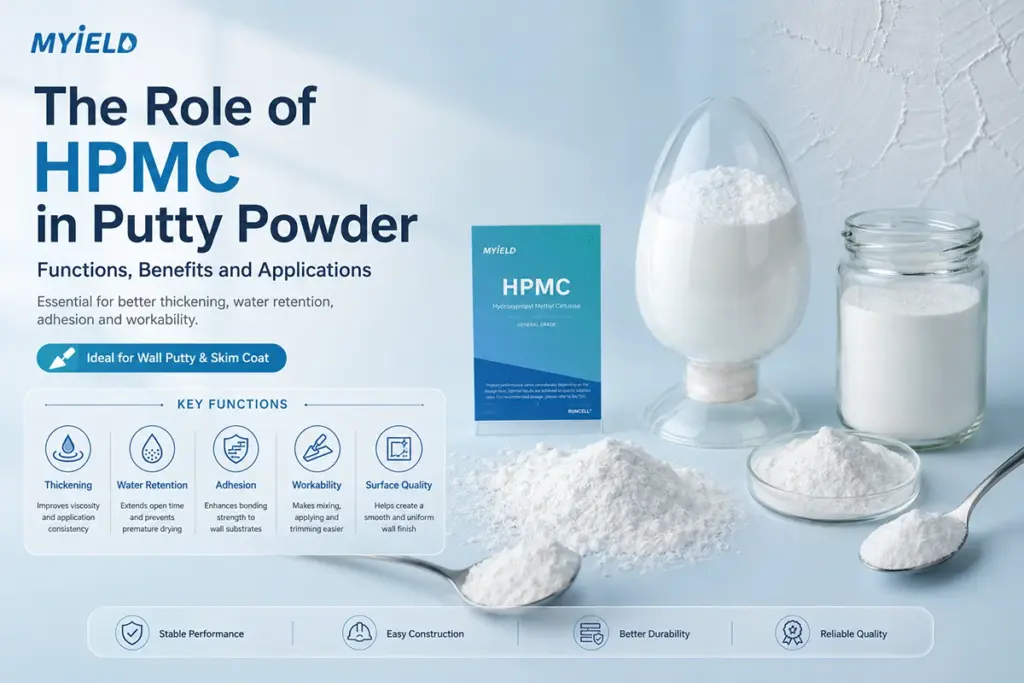
Main Functions of HPMC in Putty Powder
1. Thickening Effect
One of the most important functions of HPMC in putty powder is thickening.
HPMC can effectively increase the viscosity of the putty system, making the material easier to apply on the wall. With proper viscosity, putty powder can form a uniform paste after mixing with water. This helps workers apply the material smoothly and create an even coating on the wall surface.
By adjusting the dosage and viscosity grade of HPMC, manufacturers can control the fluidity, consistency, and application feeling of putty powder. Different markets and construction habits may require different levels of viscosity. For example, some customers prefer a lighter and smoother putty, while others need stronger consistency and better anti-sagging performance.
This is why selecting the right HPMC grade is very important for putty powder formulation.
2. Excellent Water Retention
Water retention is another key function of HPMC in putty powder.
After putty powder is mixed with water and applied to the wall, water may be absorbed quickly by the substrate or evaporate too fast under hot and dry conditions. If the putty loses water too quickly, it may cause poor workability, weak bonding, surface powdering, cracking, or uneven finishing.
HPMC has excellent water retention properties. It can help slow down water loss and prolong the workable time of putty powder. This gives construction workers enough time to apply, level, and trim the putty layer before it dries.
Good water retention also supports better hydration and curing of cement-based or gypsum-based systems, which helps improve the final strength and surface quality of the wall.
3. Improved Bonding Strength
HPMC can also help improve the bonding performance of putty powder.
In the putty system, HPMC interacts with water and other raw materials to form a stable network structure. This helps improve the adhesion between the putty layer and the wall substrate. Better adhesion can reduce the risk of cracking, hollowing, peeling, and detachment after application.
For wall finishing materials, bonding strength is one of the most important performance indicators. If the putty cannot bond firmly to the wall, the final coating system may fail over time. A suitable HPMC grade helps ensure that the putty layer remains stable and durable after construction.
4. Better Workability and Smooth Application
Good workability is essential for putty powder.
When the putty paste is too dry, too sticky, or difficult to spread, construction efficiency will decrease. Workers may need more time and effort to apply the material, and the final surface may become uneven.
HPMC helps improve the dispersion, consistency, and smoothness of putty powder. With the right HPMC, the putty can be easier to mix, easier to apply, and easier to level. It can also improve the hand feel during construction and help create a smoother wall surface.
For manufacturers, better workability means higher customer satisfaction and stronger product competitiveness in the market.
5. Improved Surface Quality
Putty powder is often used before painting or decorative coating. Therefore, the surface quality of the putty layer directly affects the final decorative effect.
HPMC helps the putty maintain stable viscosity and proper moisture during application. This can reduce uneven application, surface defects, rough texture, and premature drying. A well-formulated putty powder with suitable HPMC can provide a smoother, more uniform, and easier-to-polish surface.
This is especially important for interior wall putty, skim coat, and high-quality decorative wall systems.
6. Better Durability and Stability
HPMC contributes to the long-term performance of putty powder.
By improving water retention, adhesion, and workability, HPMC helps the putty layer form a more stable structure after drying. This can improve the durability of the wall finishing system and reduce quality problems such as cracking, powdering, peeling, and poor surface strength.
For construction material manufacturers, stable product performance is very important. A reliable HPMC grade can help improve batch consistency and reduce formulation risk.
Why HPMC Dosage and Grade Selection Matter
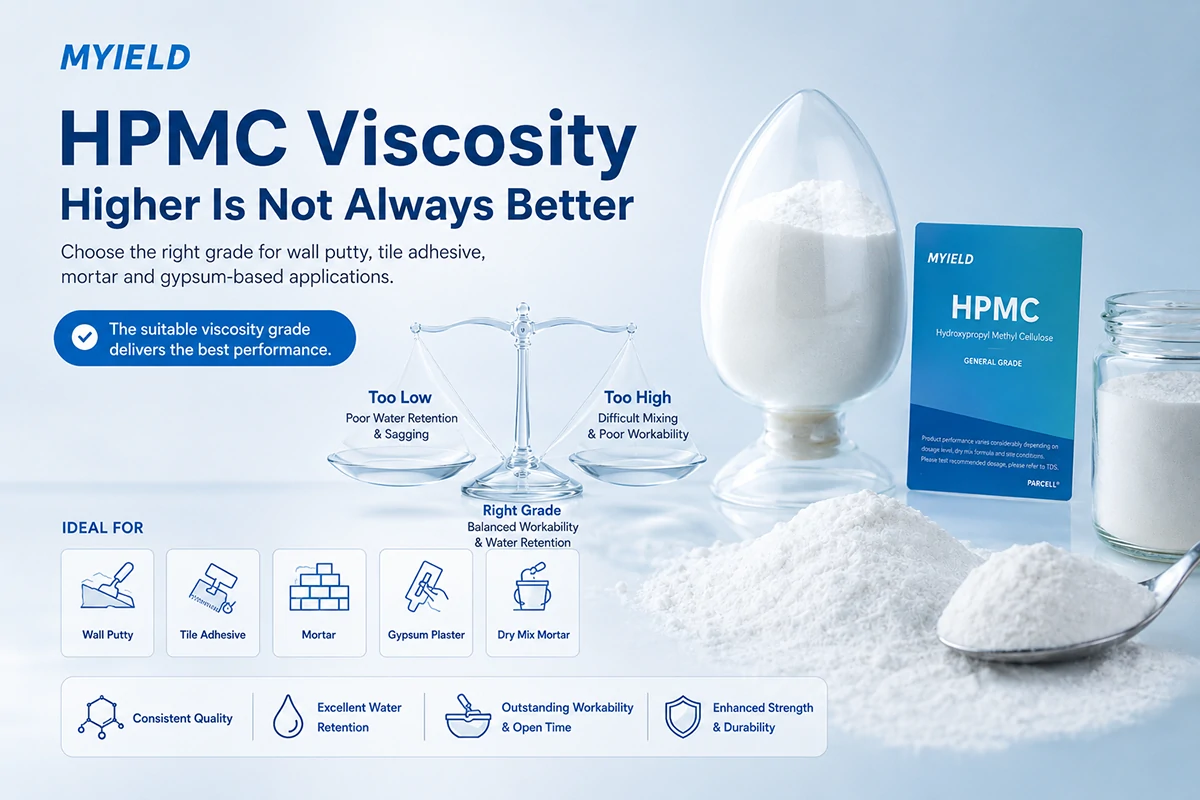
Although HPMC is essential in putty powder, more HPMC does not always mean better performance. The final effect depends on the viscosity grade, dosage, formulation system, raw materials, climate conditions, and construction requirements.
If the dosage is too low, the putty may have poor water retention, weak viscosity, and insufficient workability. If the dosage is too high, the putty may become too sticky, difficult to spread, or less efficient during construction.
Therefore, the key is to select a suitable HPMC grade and proper dosage according to the actual putty formulation.
When choosing HPMC for putty powder, manufacturers should consider:
- Required viscosity and consistency
- Water retention performance
- Application smoothness
- Open time and drying time
- Bonding strength
- Anti-sagging performance
- Compatibility with fillers, cement, gypsum, and other additives
- Local climate and construction habits
- Interior or exterior wall application
A suitable HPMC solution can help achieve a better balance between construction performance, final quality, and formulation cost.
Myield Chemical HPMC for Putty Powder Applications
Myield Chemical supplies HPMC products for putty powder, skim coat, tile adhesive, dry mix mortar, gypsum plaster, cement-based materials, and other construction chemical applications.
For putty powder systems, Myield Chemical HPMC can help improve:
- Thickening and consistency
- Water retention
- Workability
- Smooth application
- Bonding strength
- Surface quality
- Open time
- Construction stability
According to different customer requirements, Myield Chemical can help recommend suitable HPMC viscosity grades for interior wall putty, exterior wall putty, skim coat, and other wall finishing materials.
Whether your formulation needs better water retention, smoother application, stronger adhesion, improved anti-sagging performance, or balanced workability, Myield Chemical can provide product support and technical suggestions based on your actual application.
Conclusion
HPMC is an indispensable additive in putty powder.
It works as a thickener, water-retaining agent, workability modifier, and adhesion-supporting additive. A suitable HPMC grade can improve the construction performance of putty powder, enhance wall surface quality, strengthen bonding performance, and extend the service life of wall finishing systems.
For putty powder manufacturers, choosing the right HPMC is not only about viscosity. It is about achieving the best balance between water retention, workability, adhesion, surface quality, and cost performance.
Looking for a suitable HPMC grade for your putty powder formulation?
Contact Myield Chemical today for product recommendations, samples, and technical support.
Contact Myield Chemical
WhatsApp: +86-18538509097
Email: [email protected]