





























What Is Concrete and Why Concrete Additives Matter?
Concrete is a composite material formed by cementitious binders, aggregates, water, and admixtures. In modern applications, the same project may require high flow for pumping, controlled segregation resistance, reliable early strength, and stable slump retention.Concrete additives and admixtures are used to tune dispersion, rheology, and bonding behavior to meet performance targets efficiently and consistently.
Common Performance Challenges in Concrete
Typical challenges producers aim to solve include:
High water demand — lower strength and higher shrinkage risk
Insufficient slump / poor flow — difficult placement and pumping instability
Slump loss over time — reduced workability on site and higher rework risk
Segregation / bleeding — weak zones, surface defects, and inconsistent quality
Early strength limitations — slower turnaround in precast or fast-track projects
Bonding/robustness in repair overlays and grouts — debonding or powdering risk (system-dependent)
Myield Chemical Solution for Concrete Applications
Myield provides a focused additive toolkit for concrete and concrete-related cementitious systems. For this page, recommended products are strictly limited to:
core dispersion and water reduction
rheology and stability control for selected cementitious systems (process-dependent)
adhesion/cohesion enhancement for repair-related systems (system-dependent)
PCE Superplasticizer for Concrete
PCE Superplasticizer is the primary high-range water reducer used to improve dispersion of cement particles. It enables high workability at lower water-to-binder ratio—supporting strength development, pumpability, and overall performance (process-dependent).
Key Benefits:
Typical dosage guidance (starting point): 0.08%–0.30% by binder weight (trial-based; compatibility testing is required).
Cellulose Ethers (HPMC / HEMC) in Concrete-Related Systems
Cellulose ethers are not typical high-range water reducers for conventional ready-mix concrete. They are mainly used to tune rheology and water management in selected concrete-related cementitious products—such as grouts, repair mortars, patching systems, and specific high-flow mixes where segregation resistance and stability are priorities (process-dependent).
Key Benefits:
Typical dosage guidance (starting point): 0.05%–0.25% by dry mix weight for repair/grout systems (trial-based).
RDP (Redispersible Polymer Powder) for Concrete Repair & Bonding
RDP is commonly used in polymer-modified repair mortars, bonding coats, and cementitious overlays to improve adhesion, cohesion, and toughness—supporting more reliable repair performance. (System-dependent; confirm with trials.)
Key Benefits:
Typical dosage guidance (starting point): 1.0%–5.0% by dry mix weight in repair systems (trial-based).
Stronger Results with the Right Additive System
1) High Workability with Lower Water Demand
PCE enables strong dispersion for high slump/flow at reduced water ratio—supporting strength potential and work efficiency (process-dependent).
2) Better Stability Control (Process-Dependent)
For grouts, repair mortars, and selected high-flow systems, cellulose ethers can help stabilize water and rheology, reducing bleeding and improving handling stability (process-dependent).
3) More Reliable Repair Bonding and Robustness (System-Dependent)
In repair overlays and cementitious patching systems, RDP improves adhesion and cohesion. Together with controlled rheology, it supports more reliable performance in demanding repair conditions (system-dependent).
Recommended Myield Grades for Concrete Applications
Below are recommended grades presented in a product-card layout. Final selection and dosage should be confirmed by lab trials with your cement, aggregates, and local conditions.
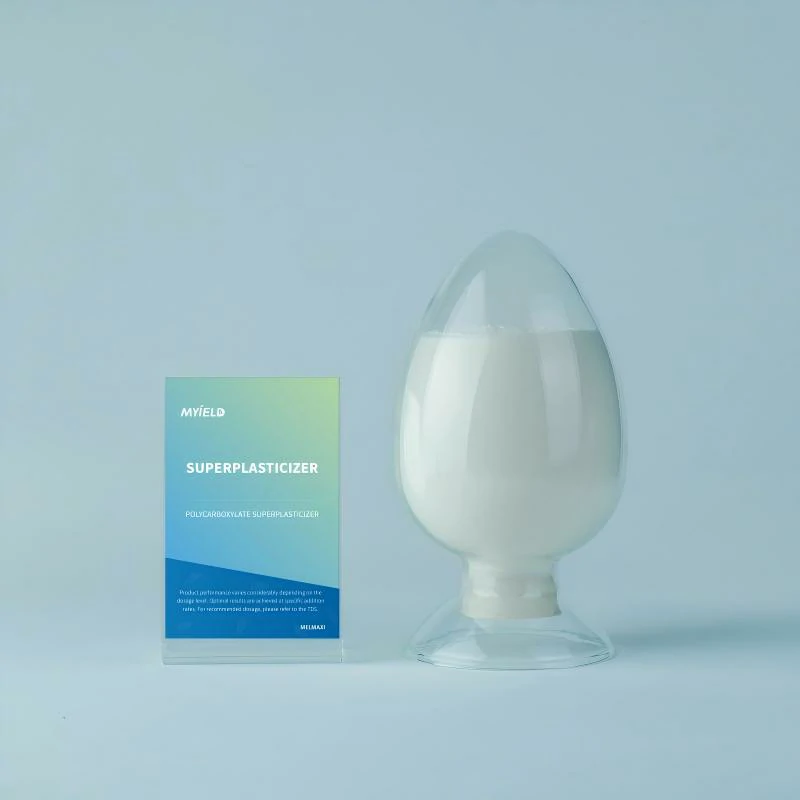
MELMAXI™ PCE P-3080G (powder)
- Recommended for: High-flow concrete and general high-range water reduction direction (ready-mix / precast / HPC, compatibility-dependent)
- Formulation value: Improves dispersion and flow; supports strength direction through lower water ratio (trial-based)
- Typical dosage (starting point): 0.08%–0.25% by binder weight
MELMAXI™ PCE P-7015 (powder)
- Recommended for: Mixes requiring improved workability retention over time (ready-mix / pumped concrete, compatibility-dependent)
- Formulation value: Supports slump retention direction and onsite workability stability (trial-based)
- Typical dosage (starting point): 0.08%–0.30% by binder weight
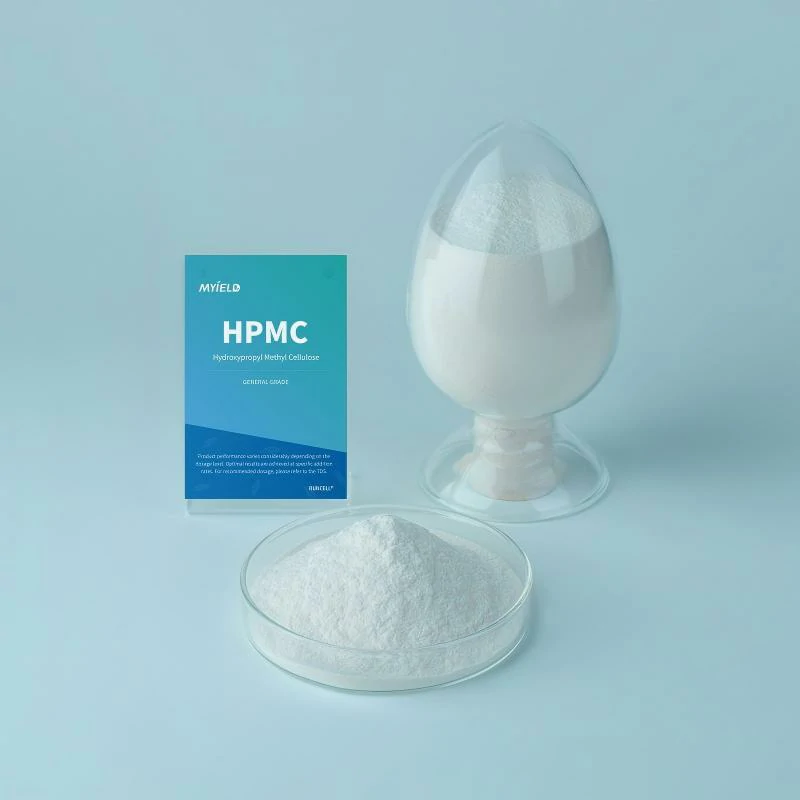
RUNCELL® HPMC KP10
- Recommended for: Cement-based grouts, repair mortars, and selected high-flow stability tuning (process-dependent)
- Formulation value: Water management and viscosity adjustment direction to improve stability and handling (trial-based)
- Typical dosage (starting point): 0.05%–0.20% by dry mix weight
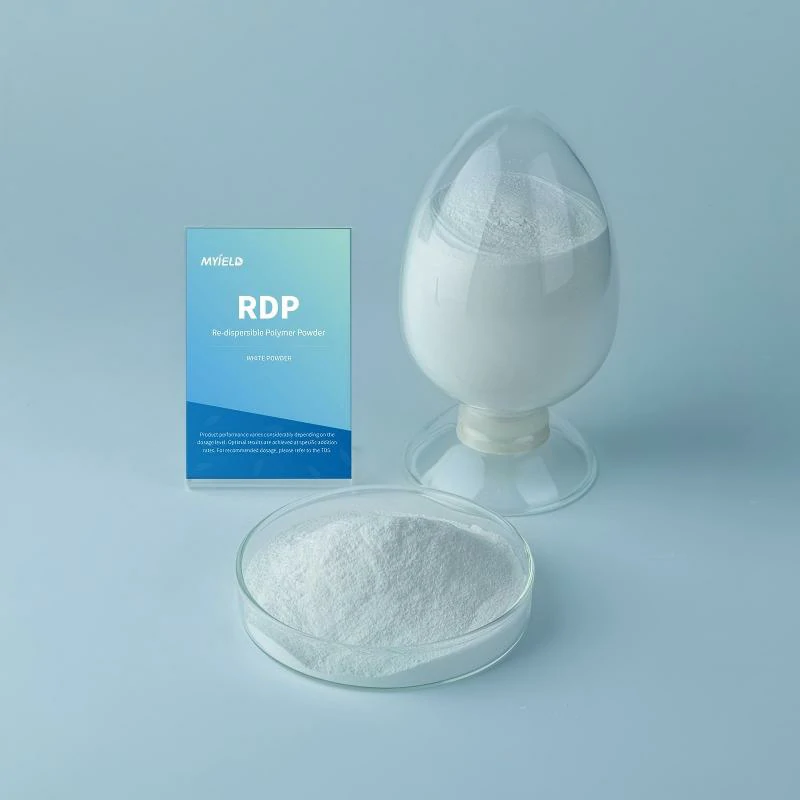
RUNCELL® RDP RE-528E
- Recommended for: Polymer-modified concrete repair mortars and bonding-related cementitious systems (system-dependent)
- Formulation value: Improves adhesion and cohesion; enhances toughness and durability balance (trial-based)
- Typical dosage (starting point): 1.5%–5.0% by dry mix weight
Why Choose Myield Chemical
FAQ
Selection depends on target flow, retention time, cement compatibility, and your production conditions. Start with a low dosage, test slump/flow retention and strength, then adjust.
They are mainly used in concrete-related cementitious products (grouts and repair mortars) or specific high-flow stability tuning cases. For conventional ready-mix, use should be validated carefully (process-dependent).
RDP is mainly used in repair mortars, overlays, and bonding coats when improved adhesion and toughness are required (system-dependent).
Typical trials include slump/flow and retention, bleeding/segregation, setting time, compressive strength, and for repair systems—bond strength and durability indicators relevant to your standard.