Inquiry Now

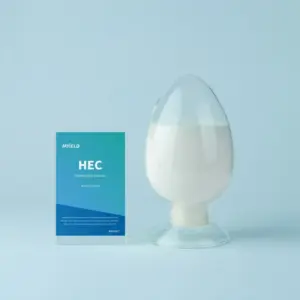
How do I use HEC as a thickener?

For best results, disperse HEC into water under strong agitation (a high-speed mixer is recommended). Keep mixing while it hydrates until fully dissolved.

Tip: A short delay before viscosity builds is normal. Allow enough hydration time, then adjust the final viscosity by water ratio and mixing time.

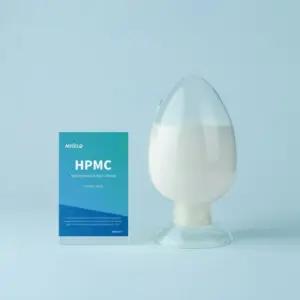
For HPMC, does higher viscosity always mean better water retention?

In general, higher viscosity can improve water retention, but it’s not the only factor—and it’s not “the higher, the better” in every formulation.

• Compare viscosity only under the same test method/conditions (temperature, spindle/rotor, concentration, etc.). Different methods can produce very different results for the same material.

• Higher viscosity often comes with slower dissolution and stronger thickening, which may affect workability, strength development, and construction feel depending on the system.

• For many dry-mix mortars, the best grade is the one that balances water retention, open time, sag resistance, and workability at the lowest effective dosage.

If you tell us your application (tile adhesive / wall putty / plaster / EIFS / self-leveling) and target performance, we’ll recommend the most suitable Myield grade.

Is “powdering” or “dusting” of wall putty related to HPMC?

Putty powdering is usually driven by the overall formulation, such as filler/binder quality, grading, binder ratio, curing, and jobsite conditions.

Cellulose ether can influence the issue indirectly: insufficient water retention can worsen surface defects and powdering.

If you have this problem, we can help you troubleshoot by checking raw materials, water demand and mixing process, and selecting the right cellulose ether type (HPMC vs HEMC), viscosity range, and dosage.

Do you provide OEM/ODM branding and packaging?

Yes. We can support neutral packing, custom printed bags, and OEM/private label options depending on product type and order quantity.

For a fast quotation, send your target bag design and packing specification to [email protected]

Can you recommend equivalent grades if I’m using another brand now?

Yes. If you share your current grade name, application, and performance targets, we can propose equivalent or alternative Myield grades and provide TDS/SDS and testing guidance.

Contact: [email protected] | WhatsApp: +86 18538509097

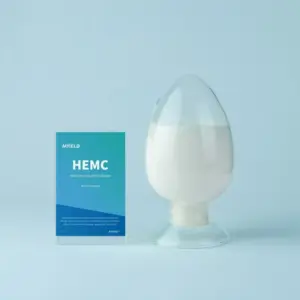
Both HPMC and HEMC/MHEC can be used in tile adhesive—what’s the difference?

Both can work well in cement-based tile adhesives, but the best choice depends on climate and desired performance.

• HEMC/MHEC typically performs better in hot conditions and can deliver stronger water retention and thermal stability on high-temperature job sites.

• HPMC is widely used for balanced performance and strong cost-effectiveness in many markets.

Tell us your climate and target standard (e.g., C1/C2, open time, anti-sag), and we’ll suggest the optimal grade and dosage starting point.

How do I decide the dosage of cellulose ether for wall putty or tile adhesive? Can you provide a formulation?

Yes. We can provide typical starting formulations and dosage recommendations for common systems (wall putty, tile adhesive, plaster, EIFS, grouts, repair mortars, and more).

Final dosage should be adjusted based on local fillers, cement type, sand grading, weather, mixing process, and regulations.

Email your formulation goal to [email protected] and our technical team will support you.

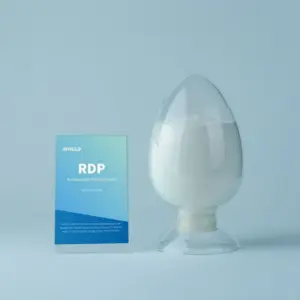
What is the shelf life of your products (cellulose ethers, RDP, etc.)?

Most dry powder products are typically 24 months when stored unopened in original bags and kept cool, dry, and indoors.

We recommend re-checking quality if products are stored in high humidity/temperature or beyond the recommended period.

What quality documents can you provide?

We can provide standard quality and compliance documents upon request, such as TDS/SDS, COA per batch, and packing/loading guidance.

If your market requires specific compliance documents, tell us your destination country and application.

What is your MOQ for ocean shipment?

For ocean shipping, a common starting point is one pallet (exact loading depends on product and packing). Smaller trial quantities are often shipped via courier or air cargo.

For your exact MOQ and best logistics plan, contact [email protected]

Can I get samples for testing? How?

Yes. We support samples for lab testing and trial production. A typical sample size is 500g–1000g depending on product and purpose, shipped by courier.

Message us with your application and target performance: [email protected] | WhatsApp: +86 18538509097

How can I get current pricing?

Please contact us with product name/grade, quantity, destination port, and packing preference. We will reply with a quotation and lead time.

Email: [email protected] | WhatsApp: +86 18538509097

Can you produce modified grades for my formulation?

Yes. We can support grade selection and modification based on your formulation targets (workability, open time, sag resistance, strength, water repellency, etc.).

Send your system details to [email protected]

How can I get more product information quickly?

You can view technical highlights on our product pages. For full technical support (TDS/SDS/COA, grade matching, formulation guidance), contact [email protected] or WhatsApp +86 18538509097

Do you have a distributor/agent in my country?

In some markets we work with local partners. Share your country and planned volume, and we will advise the best supply route and support options.

Keep in Touch

Phone /Whatsapp / Wechat

Email Address

Location

Need More Help? Our Experts Are Here for You.