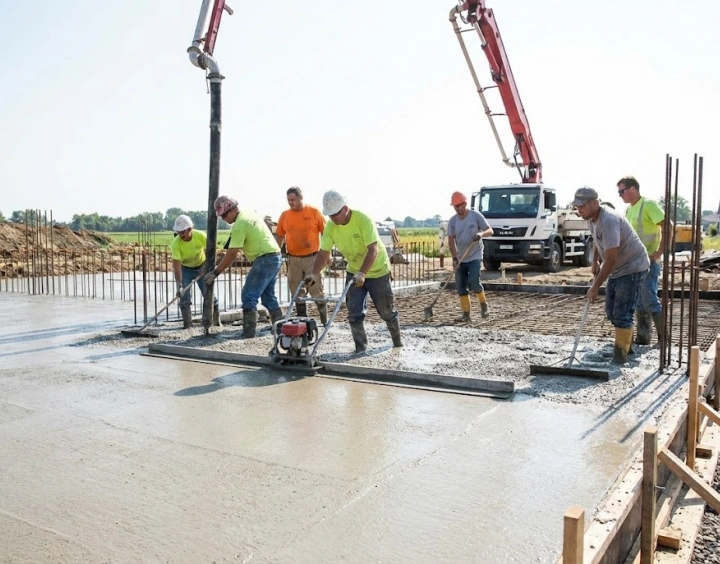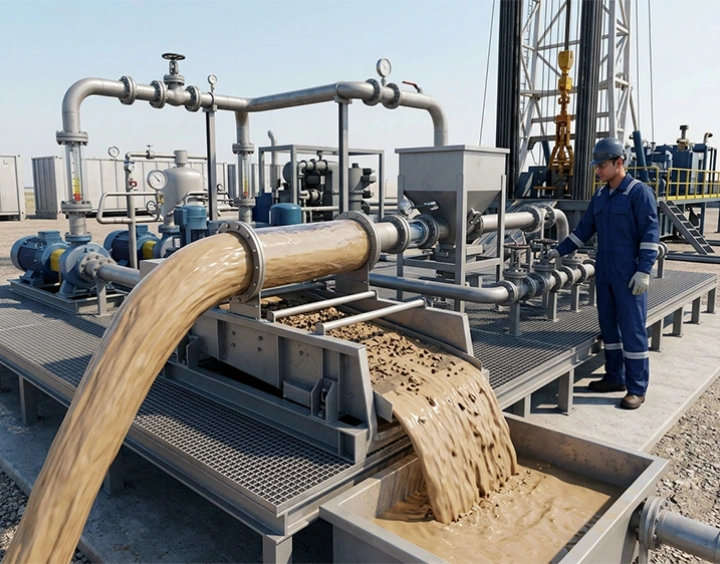



































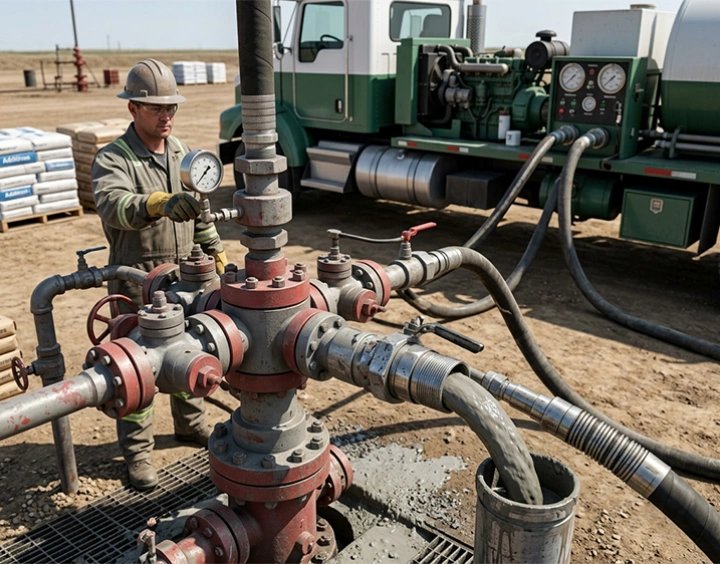
What Is Oilfield Cementing?
Oilfield cementing is the process of pumping cement slurry into the annulus to support casing and provide zonal isolation – preventing unwanted fluid or gas movement between formations and protecting the casing from corrosive fluids.
A successful cement job requires a balance of:
- Pumpability and rheology control
- Fluid loss control and gas migration resistance
- Predictable thickening and setting behavior
- Early strength development
- Long-term cement sheath integrity
Common Challenges in Oilfield Cementing
Different wells bring different constraints, but the most common formulation and jobsite challenges include:
Low-temperature slow strength development – longer WOC (wait-on-cement), higher operational risk.
Gas migration and channeling – loss of zonal isolation and costly remedial work.
High fluid loss or dehydration – unstable slurry, permeability pathways, poor bond.
Rheology instability – hard-to-pump, segregation, or poor placement.
Thermal and pressure cycling – debonding, micro-annulus, loss of sealing integrity.
High salinity or complex mix water – compatibility issues and performance drift.
Myield Solution for Oilfield Cementing
We use four complementary additive families to control the cementing chain: pump -> place -> set -> seal.
1) Calcium Formate (Accelerator) – drives faster hydration and earlier set/strength.
2) Nanocrystalline Nucleus Early Strength Agent (C-S-H seeding) – provides nucleation sites to accelerate hydration, especially at low temperature.
3) Alkali-depressant (Alkali management and densification support) – supports reduced alkali migration tendency and a denser matrix approach.
4) Styrene-Butadiene RDP Powder (SBR polymer modifier) – improves bonding and toughness to support cement sheath integrity.
Calcium Formate in Oilfield Cementing
Calcium formate is used to speed up hydration and early strength development, helping shorten WOC and reduce low-temperature delays.
Key Benefits:
Nanocrystalline Nucleus Early Strength Agent in Oilfield Cementing
This additive works as a nanocrystalline seed that promotes early formation of hydration products, improving early strength – particularly helpful at low-temperature curing.
Key Benefits:
Alkali-depressant in Oilfield Cementing
In cement systems, soluble alkali movement is commonly reduced via lower alkali input, lower water content, and better densification – which reduces pathways for ion migration. Myield’s alkali-depressant is positioned for alkali management and matrix compactness support in demanding cement environments.
Key Benefits:
Styrene-Butadiene (SBR) RDP Powder in Oilfield Cementing
SBR polymer modification helps improve bonding and toughness, supporting integrity against brittle failure and debonding under thermal or pressure cycling.
Key Benefits:
Stronger Results with the Combined System
When the four additives are designed as a package, you typically target three outcomes:
calcium formate plus nanocrystalline nucleus accelerate early hydration and reduce WOC uncertainty.
polymer modification helps improve integrity against brittle failure and bonding loss.
alkali management and densification logic support reduced ion migration pathways.
Recommended Grades for Oilfield Cementing
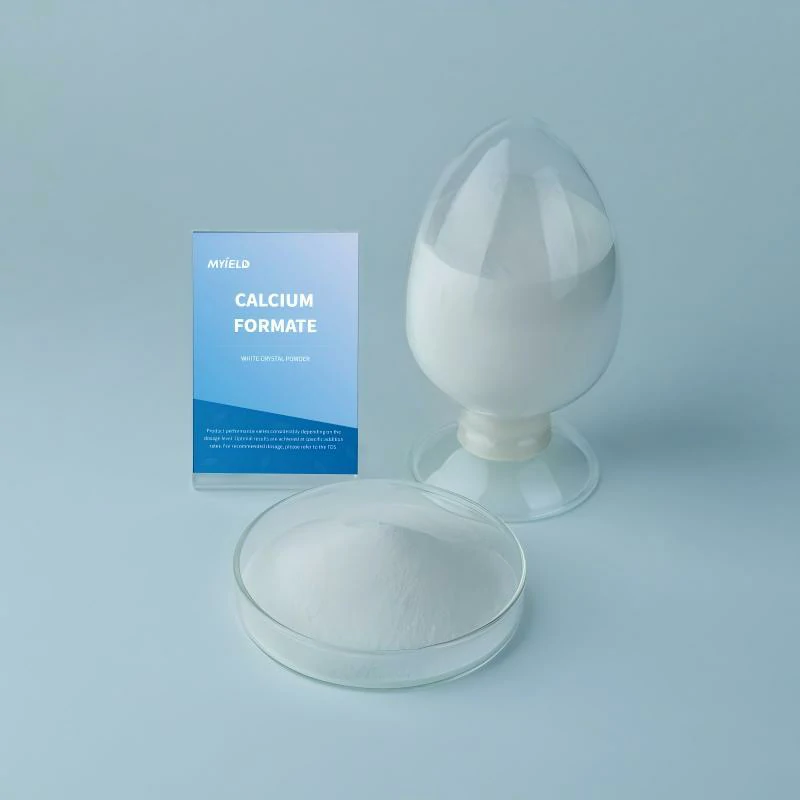
Calcium Formate – Cementing Accelerator
- Positioning: Practical early-strength accelerator for low-temperature and time-sensitive cementing.
- Recommended for: Low-temperature wells, early strength schedule targets, WOC reduction designs.
- Formulation value: Faster hydration kinetics and earlier strength development.

Nanocrystalline Nucleus Early Strength Agent
- Positioning: C-S-H seeding to boost early strength, especially under low-temperature curing.
- Recommended for: Low-temperature oil well cementing, early strength enhancement with controlled thickening behavior.
- Formulation value: Promotes hydration product formation and early-age densification.
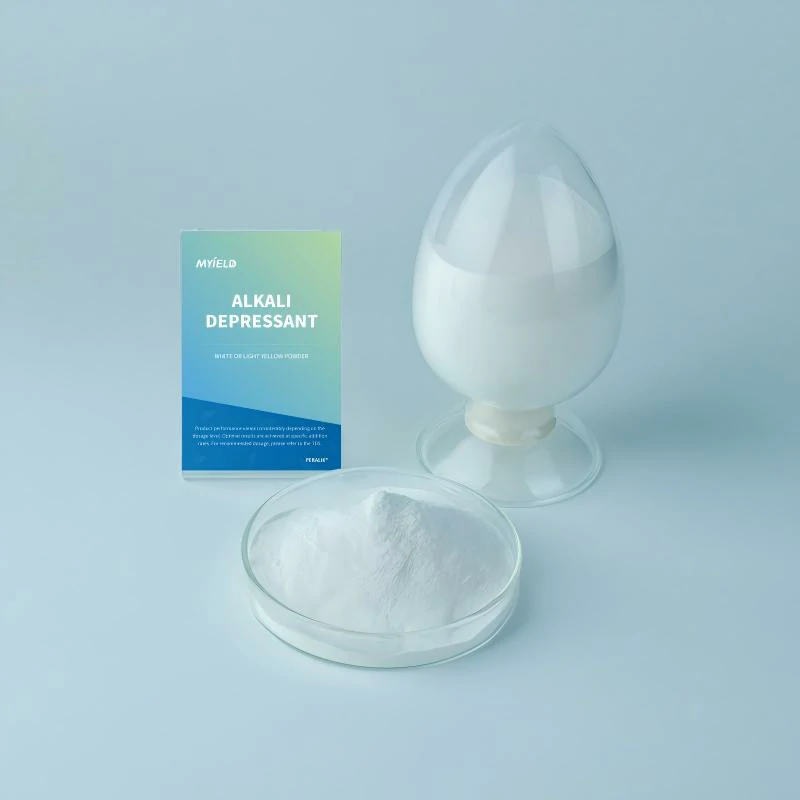
Alkali-depressant
- Positioning: Alkali management and compactness support within multi-additive cementing designs.
- Recommended for: Systems sensitive to soluble alkali migration, long-term integrity-driven designs.
- Formulation value: Supports reduced migration pathways and stable matrix concept.
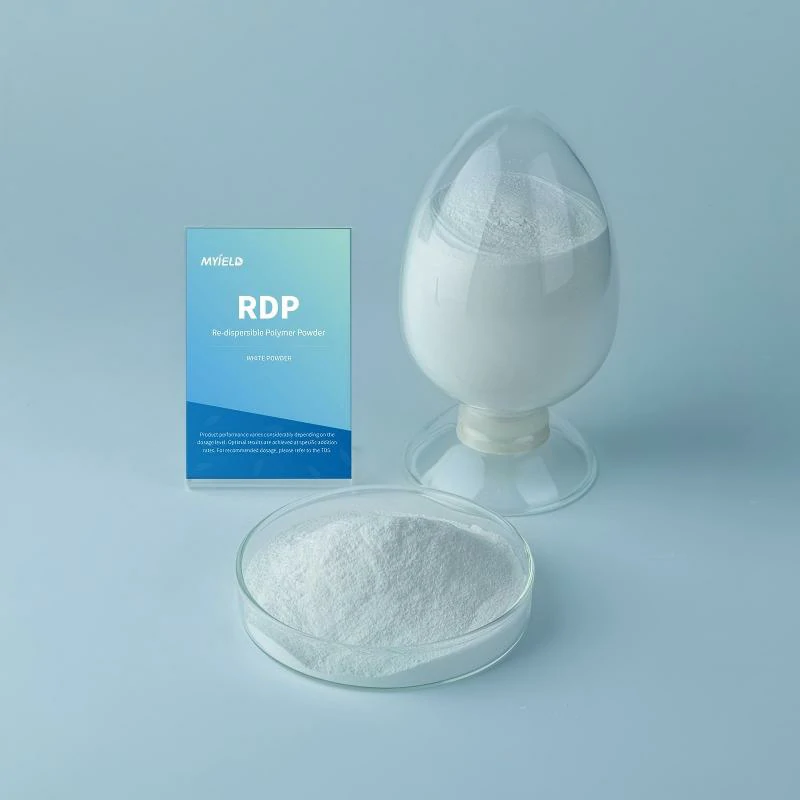
Styrene-Butadiene RDP Powder
- Positioning: Polymer toughening and bonding modifier for improved cement sheath integrity.
- Recommended for: Gas migration risk wells, cyclic loads, toughness and bonding improvement targets.
- Formulation value: Improves mechanical behavior and bonding-related performance in polymer-modified cementing systems.
Why Choose Myield?
FAQ
Yes. They target early strength via different mechanisms. Final dosage must be tuned to avoid unwanted thickening-time shifts.
Start with calcium formate at 0.5/1.0/2.0% BWOC and the nucleus agent at 0.3/0.6/1.0% BWOC, then optimize based on results and cost-performance.
Polymer systems are often chosen to improve integrity and can be part of gas-migration control strategies, depending on the full slurry design.
Compatibility depends on cement class, water chemistry, and other additives. Validate with lab tests using your actual mix water conditions.
Yes. Share BHCT/BHST, density target, mix water type, thickening time, fluid loss target, and gas migration risk level. We will propose a starting package and dosage ladder for validation.