

























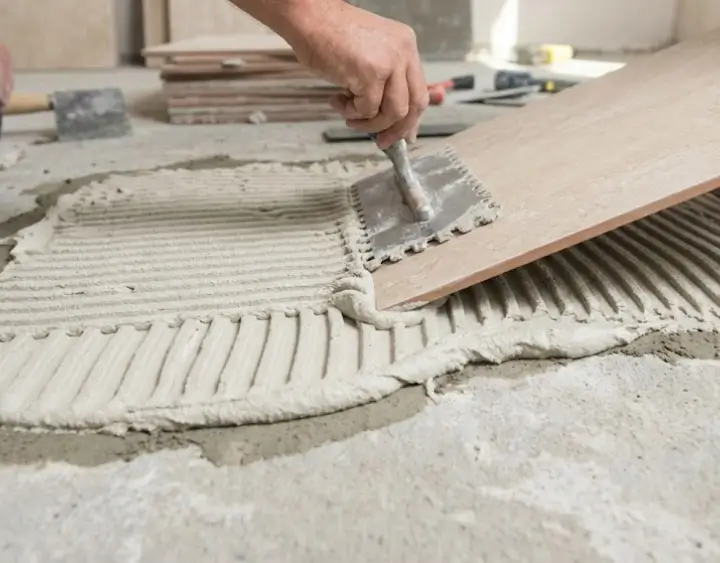
What Is Tile Adhesive?
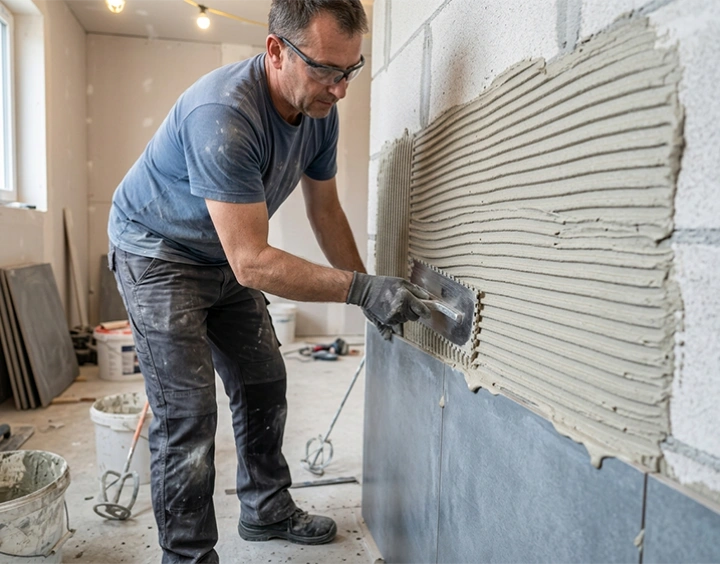
Tile adhesive is a cement-based (often polymer-modified) bonding mortar used to install ceramic tiles, porcelain tiles, and selected natural stones. Compared with traditional sand–cement mortar, tile adhesive needs controlled rheology, high water retention, and reliable bonding to ensure stable placement, sufficient open time, and durable adhesion after curing.
Common Formulation Challenges in Tile Adhesives
Tile adhesive performance issues often come from these critical points:
Insufficient open time — poor transfer, weak bonding, tile detachment risk
Poor water retention — rapid drying, low hydration, reduced adhesion strength
Tile slip on vertical surfaces — installation difficulty and uneven alignment
Unstable troweling feel — sticky, gritty, or too dry; poor combing and wetting
Poor wetting on low-absorption tiles — weak interface bonding
Durability and deformation demands — cracking risk or reduced long-term reliability (system-dependent)
Myield Chemical Solution for Tile Adhesives
Myield focuses on two additive families that directly control the apply–hold–bond chain in tile adhesives:
1) Cellulose Ethers (HPMC / HEMC)
Used to manage water retention, rheology, and workability, helping improve open time, anti-slip, and trowelability.
2) RDP Powder (Redispersible Polymer Powder)
Used to enhance adhesion, cohesion, flexibility, and durability, improving performance especially on demanding substrates/tiles.
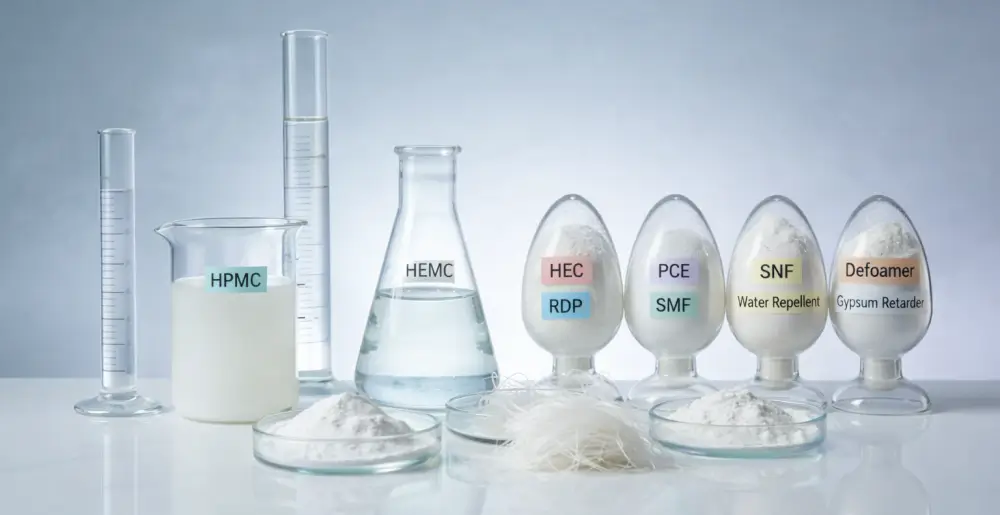
Cellulose Ethers in Tile Adhesives (HPMC / HEMC)
A well-selected cellulose ether helps tile adhesives achieve stable fresh performance and reliable bonding behavior.
Key Benefits:
Typical dosage guidance (starting point): 0.20%–0.50% by dry mix weight (final dosage should be confirmed by trials).
RDP Powder in Tile Adhesives
RDP forms a polymer film within the cement matrix, strengthening the bonding interface and improving toughness.
Key Benefits:
Typical dosage guidance (starting point): 1.5%–6.0% by dry mix weight (adjust based on target performance level).
Stronger Results with the Right Additive System
Cellulose ether helps maintain moisture and wetting; RDP enhances bonding and cohesion—supporting more dependable adhesion on different tiles and substrates.
Controlled water retention improves open time stability and helps reduce false drying on the surface during application.
Optimized rheology improves ridge stability and shape holding, helping reduce tile slip and improving installation speed and finish quality.
Recommended Myield Grades for Tile Adhesives
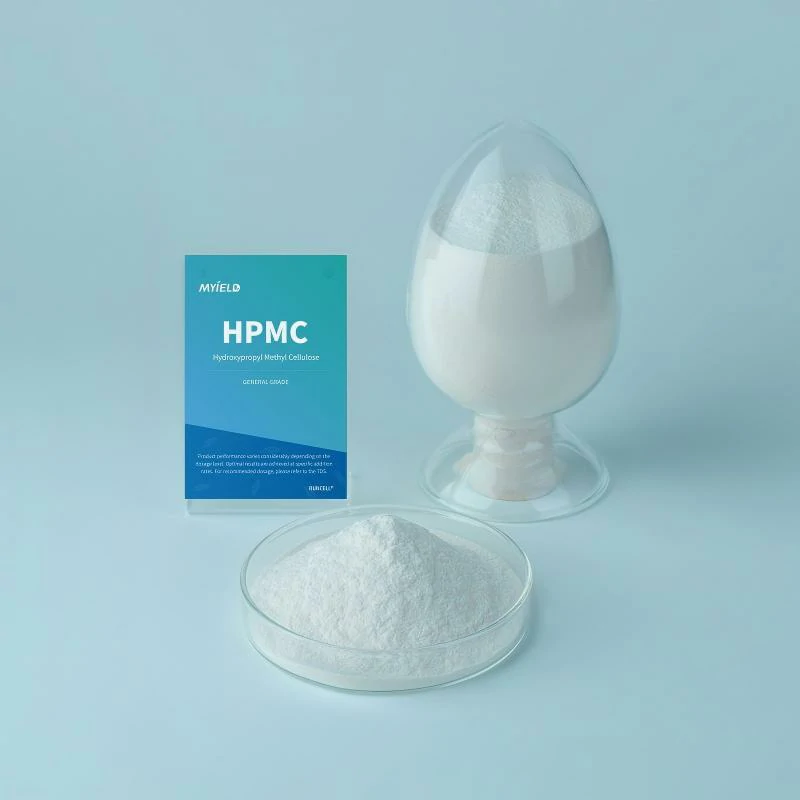
RUNCELL® HPMC P3000M
- Positioning: Tile-adhesive-oriented HPMC for improved open time and wet adhesion (system-dependent)
- Recommended for: Improved tile adhesives with higher open time and bonding requirements; thin-bed installations and large-format tile handling improvements
- Formulation value: Stable water retention, improved workability, better transfer and open time stability
- Typical dosage: 0.25%–0.50% (trial-based)
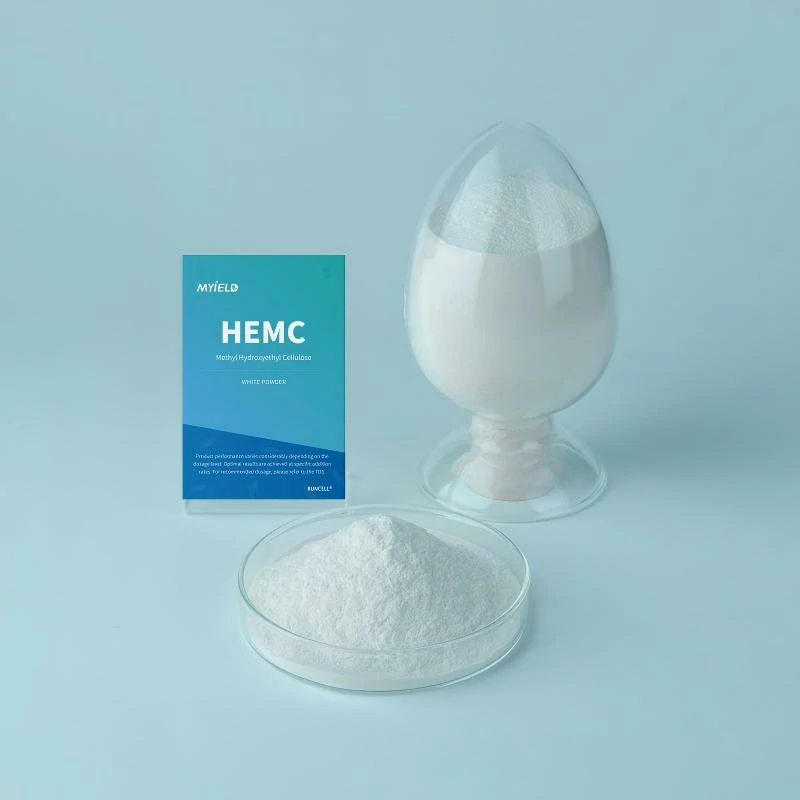
RUNCELL® HEMC / MHEC KE30(S)
- Positioning: Anti-sag and workability-stability grade for cementitious mortars
- Recommended for: Wall tile adhesives requiring anti-slip and stable ridges; formulations needing smoother application and stable open time
- Formulation value: Stable rheology, improved handling, better ridge stability and reduced slump
- Typical dosage: 0.25%–0.55% (trial-based)
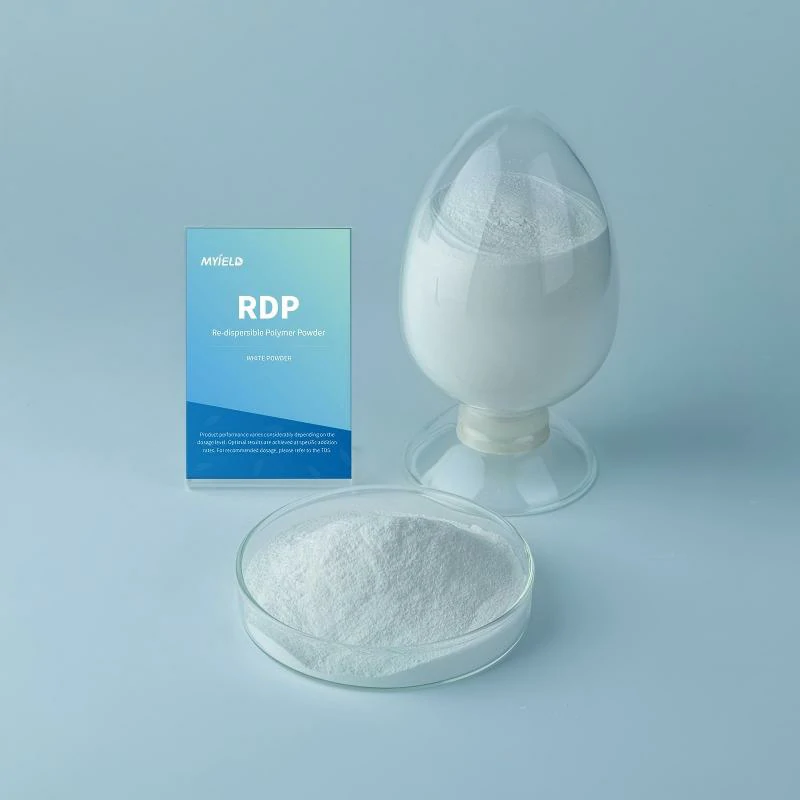
RUNCELL® RDP RE-501A
- Positioning: General-purpose EVA-based RDP for cementitious mortars
- Recommended for: Standard and improved tile adhesives needing stronger adhesion and cohesion; formulations targeting more reliable bonding performance
- Formulation value: Enhanced adhesion, cohesion, and overall robustness
- Typical dosage: 2.0%–5.0% (trial-based)
Why Choose Myield Chemical
FAQ
In some standard systems, cellulose ether can provide workability and water retention. However, RDP is commonly used when stronger adhesion, better cohesion, and enhanced durability are required—especially for improved tile adhesives.
Both improve water retention and rheology. Selection depends on target feel, anti-slip behavior, and open time stability. Many manufacturers trial one primary grade first and then fine-tune.
Use a thixotropy-oriented cellulose ether grade, control water ratio, and ensure proper sand grading. RDP helps cohesion, but anti-slip mainly comes from rheology design.
Cellulose ether often starts around 0.20%–0.50%, and RDP often starts around 1.5%–6.0%, then adjusted based on performance targets and raw materials.
Yes. Share your target adhesive class/performance direction, tile type, cement and sand info, and we will recommend suitable grades and a clear trial plan.