























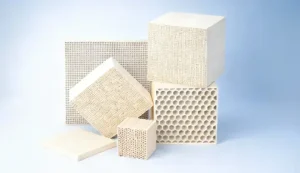

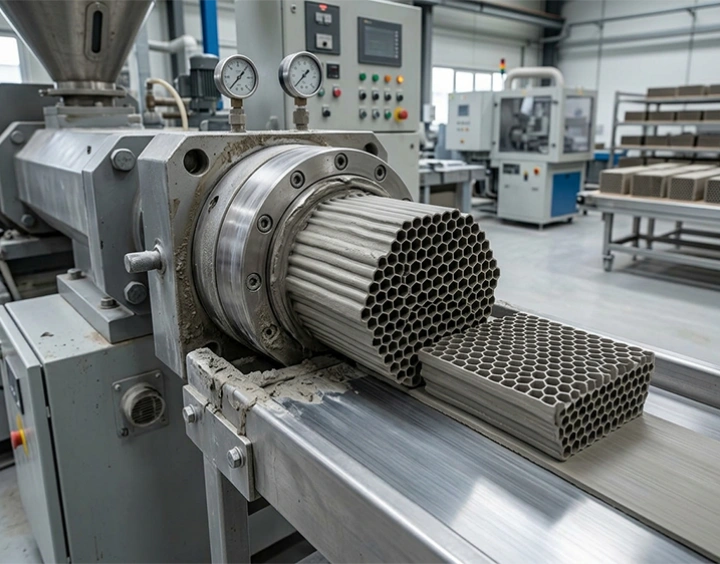
What Is Honeycomb Ceramics and Why HPMC Matters?
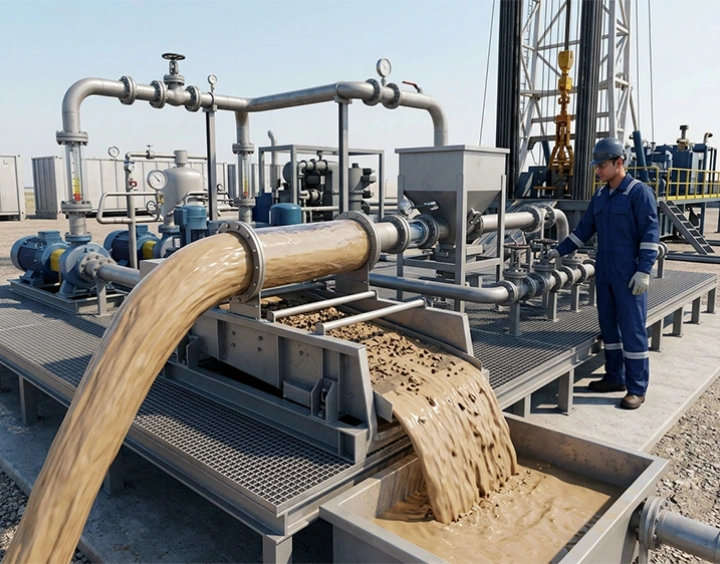
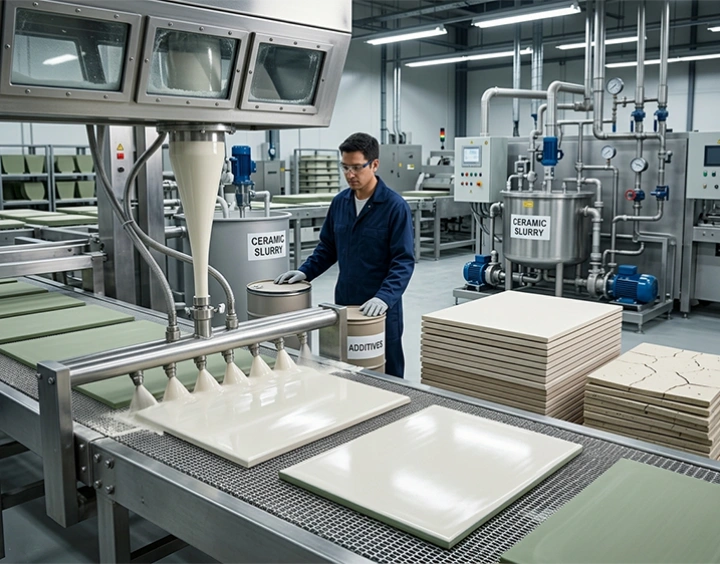
Honeycomb ceramics are thin-wall, multi-channel ceramic structures widely produced via extrusion forming. During extrusion, the formulation must flow smoothly through the die while maintaining shape retention and uniform cell geometry. After forming, the green body must withstand handling and drying without cracking or collapse. HPMC is commonly used as a binder and rheology modifier to deliver lubricity, viscosity build, green strength, and water retention needed for stable forming and controlled drying (system-dependent).
Common Formulation & Processing Challenges
Tile adhesive performance issues often come from these critical points:
High extrusion resistance — higher pressure/torque, unstable throughput, and die wear risk
Poor lubrication — rough surfaces, tearing, or die lines (system-dependent)
Low green strength — fragile walls, chipping, deformation, or collapse during handling
Shape instability — loss of cell geometry, slump, or dimensional drift during forming/early drying
Drying sensitivity — cracking, warping, edge curling, or internal stress buildup (system-dependent)
Batch-to-batch variability — inconsistent hydration and rheology behavior from mixing differences
Myield Chemical Solution
Myield focuses on one additive family that directly supports extrusion control and green body stability in honeycomb ceramics:
Cellulose Ethers (HPMC) — Used to support extrusion lubrication, rheology control, shape retention, green strength, and drying stability, helping improve processing consistency in honeycomb ceramic production.
How HPMC Improves Honeycomb Ceramics Performance
Helps reduce forming resistance and supports smoother extrusion behavior (system-dependent)
Improves toughness of thin walls for safer handling and reduced breakage risk
Supports dimensional stability and cell geometry retention during forming and early drying
Helps widen the drying window and reduce cracking tendency (system-dependent)
More stable rheology can reduce batch variability (process-dependent)
Recommended Myield HPMC Grades for Honeycomb Ceramics
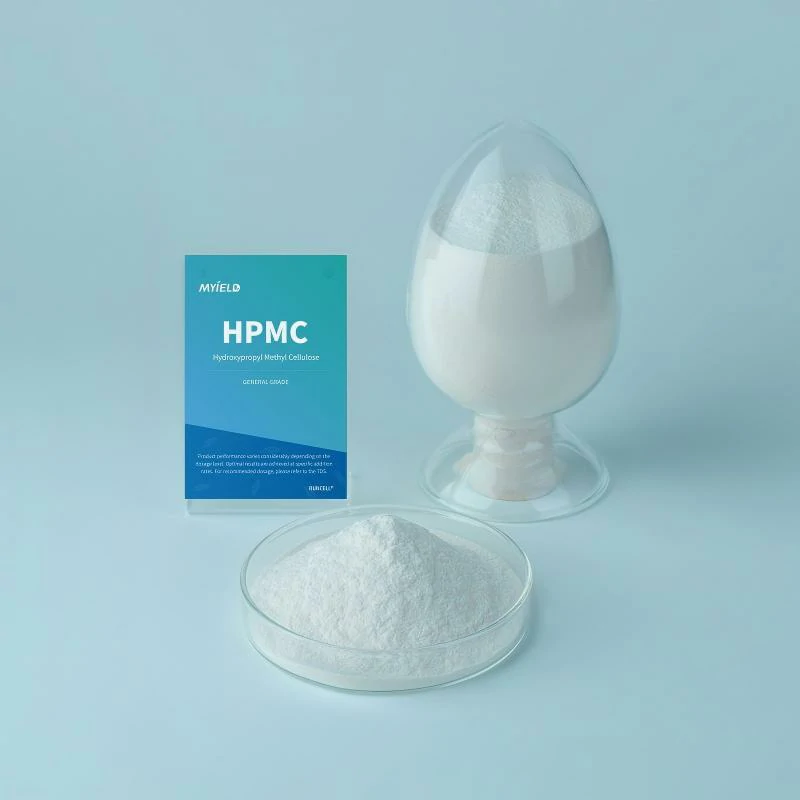
RUNCELL® HPMC KP35
- Recommended for: General honeycomb extrusion systems needing stable workability and green strength direction
- Key value: Balanced viscosity build and lubrication direction (trial-based)
- Typical starting dosage: 0.30%–1.00% by total dry solids (trial-based)
RUNCELL® HPMC KP40M
- Recommended for: Systems requiring stronger shape retention and dimensional stability direction
- Key value: Improved shape holding during forming and early drying direction (process-dependent)
- Typical starting dosage: 0.25%–0.90% by total dry solids (trial-based)
RUNCELL® HPMC KP100
- Recommended for: Extrusion systems requiring higher viscosity build and stronger green body strength direction
- Key value: Higher thickening efficiency and toughness direction (trial-based)
- Typical starting dosage: 0.20%–0.80% by total dry solids (trial-based; start low and titrate)
RUNCELL® HPMC KP150E
- Recommended for: Systems seeking a practical starting grade when balancing cost and basic extrusion stability direction
- Key value: Efficient water retention and viscosity build direction (trial-based)
- Typical starting dosage: 0.25%–0.90% by total dry solids (trial-based)
Why Choose Myield Chemical
FAQ
Yes. HPMC is widely used as a binder and rheology modifier in extrusion forming to improve lubrication, green strength, and water management. Final additive fit is system-dependent.
Optimize binder grade/dosage, solids loading, and drying schedule. HPMC can support water retention and green strength direction, but trials are required because cracking is process-dependent.
Extrusion pressure/torque, surface quality, green strength, cell geometry retention, dimensional stability, and drying crack rate.
Common trial windows are roughly 0.20%–1.00% by total dry solids depending on the system. Start mid-range and adjust based on extrusion and drying results.