











What Is Self-Leveling Compound?
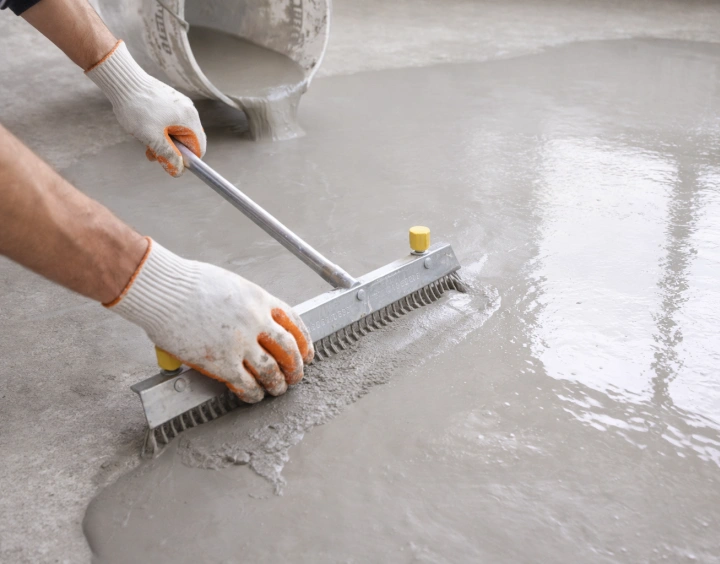
A self-leveling compound is a flowable cementitious (or gypsum-based) underlayment used to create a smooth, level surface before installing flooring (tiles, vinyl, SPC/LVT, carpets, wood, etc.). Unlike conventional mortars, SLC must flow easily, remain stable without segregation, release entrapped air, and develop reliable strength and adhesion after curing.
Common Formulation Challenges in Self-Leveling Compounds
Typical challenges manufacturers aim to solve include:
Insufficient flow or poor leveling — hard to spread, uneven thickness
Segregation / bleeding — unstable surface and weak zones after curing
Pinholes and bubbles — poor appearance and reduced floor quality
Too fast or unstable setting — short working time and application risk
Weak adhesion to substrates — debonding risk (system-dependent)
Shrinkage and cracking sensitivity — durability concerns (system-dependent)
Inconsistent pumpability — unstable application in pumped systems (process-dependent)
Myield Chemical Solution for Self-Leveling Compounds
Myield provides an additive system that helps control the flow–stability–finish chain in SLC formulations:
1) Cellulose Ethers (HPMC / HEMC)
Low-viscosity cellulose ethers stabilize water management and rheology to reduce bleeding/segregation while maintaining workable flow.
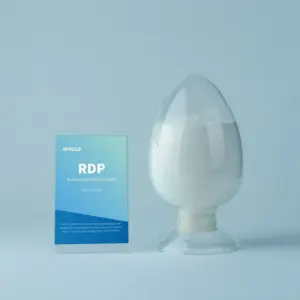
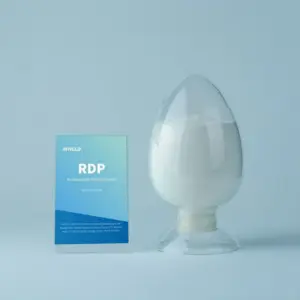
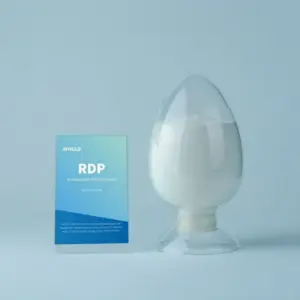
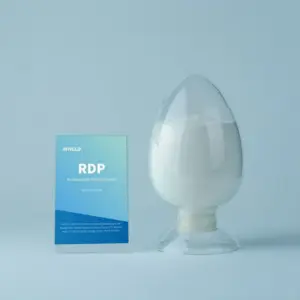
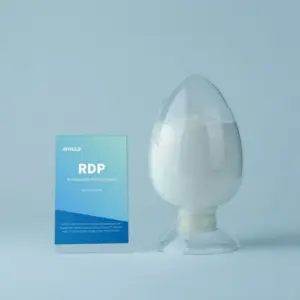
2) RDP Powder (Redispersible Polymer Powder)
RDP enhances adhesion, cohesion, and toughness—supporting more reliable bonding and surface integrity (system-dependent).
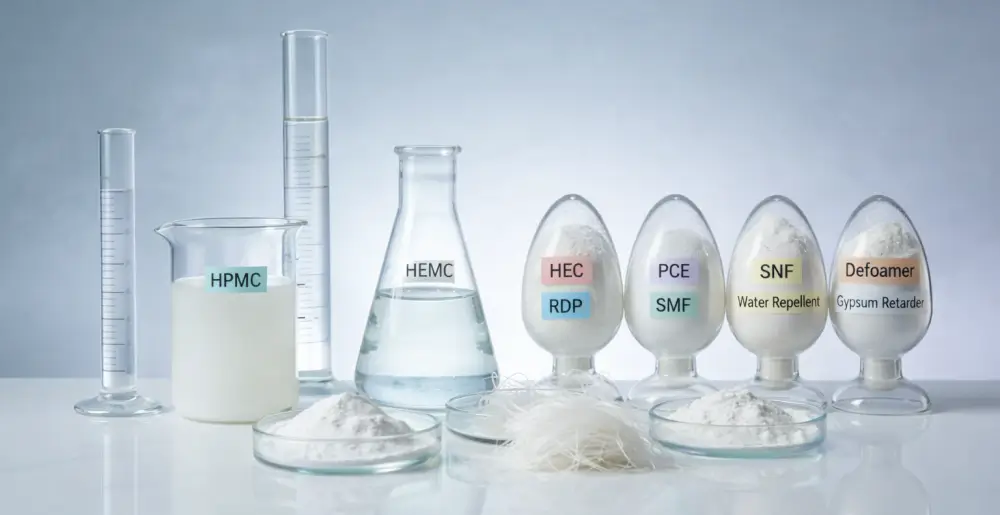
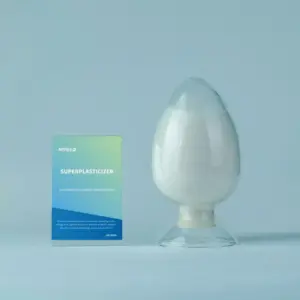
3) PCE Superplasticizer
PCE provides high water reduction and strong dispersion, enabling high flow at lower water demand and supporting strength development.
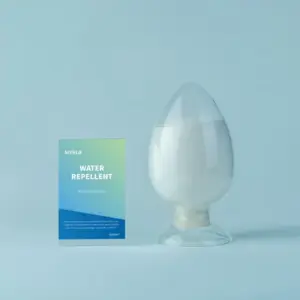
4) Silane-based Water Repellent Powder
Silane-based water repellent can reduce water absorption and improve water resistance in selected SLC systems (system-dependent).
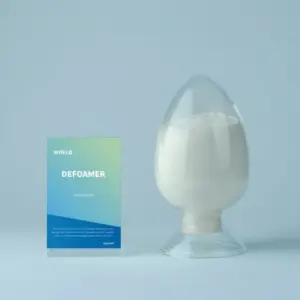
5) Defoamer Powder
Defoamer helps release entrapped air during mixing and flow, reducing pinholes and improving surface finish.
Cellulose Ethers in Self-Leveling Compounds (HPMC / HEMC)
In self-leveling formulations, cellulose ethers are typically used at lower dosages and lower viscosity to balance flowability with stability.
Key Benefits:
Typical dosage guidance (starting point): 0.03%–0.12% by dry mix weight (final dosage should be confirmed by trials).
RDP in Self-Leveling Compounds
RDP is used when improved bonding, cohesion, and toughness are required—especially on challenging substrates or in renovation systems (system-dependent).
Key Benefits:
Typical dosage guidance (starting point): 0.3%–1.8% by dry mix weight (trial-based; adjust by performance target and cost positioning).
PCE Superplasticizer in Self-Leveling Compounds
PCE improves dispersion of binders and fine fillers, enabling higher flow at lower water demand—supporting strength development and stability.
Key Benefits:
Typical dosage guidance (starting point): 0.05%–0.30% by binder weight (trial-based; compatibility testing is required).
Silane-based Water Repellent in Self-Leveling Compounds
In selected SLC systems where reduced water absorption is desired, silane-based water repellent powder can be used to improve water resistance without heavily impacting workability (final behavior depends on full formulation design).
Key Benefits:
Typical dosage guidance (starting point): 0.10%–0.60% by dry mix weight (trial-based).
Defoamer Powder in Self-Leveling Compounds
Defoamer powder supports air release during mixing and flowing, helping reduce pinholes and improving the surface finish quality.
Key Benefits:
Typical dosage guidance (starting point): 0.03%–0.20% by dry mix weight (trial-based; over-dosage may affect stability).
Stronger Results with the Right Additive System
PCE delivers strong dispersion for high flow; a low-viscosity cellulose ether helps stabilize water and rheology—supporting smooth leveling with reduced bleeding risk (system-dependent).
Defoamer supports air release during mixing and flow. With stable rheology control, it helps improve surface appearance and finishing quality.
RDP improves adhesion and cohesion for renovation or higher-performance systems. For selected moisture-exposure targets, silane-based water repellent can further reduce water absorption (system-dependent).
Recommended Myield Grades for Self-Leveling Compounds
Below are recommended grades presented in a product-card layout. Final selection and dosage should be confirmed by lab trials with your cement, fillers, and local conditions.
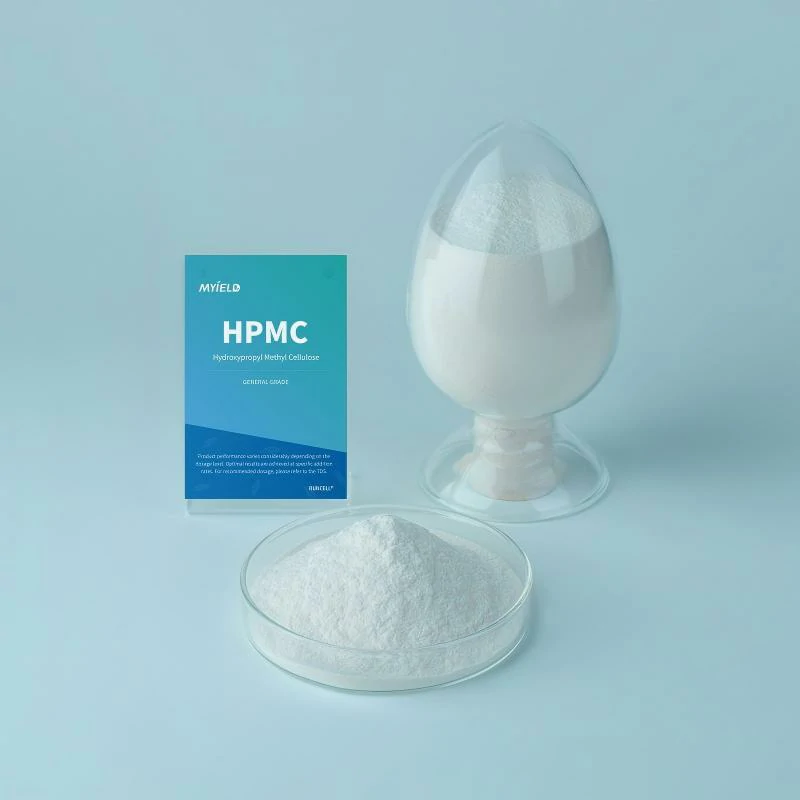
RUNCELL® HPMC P500
- Positioning: Low-viscosity HPMC designed for self-leveling compounds and stable anti-settling behavior
- Recommended for: Standard and pumped self-leveling systems needing stability with minimal thickening
- Formulation value: Helps control bleeding/segregation while maintaining workable flow (trial-based)
- Typical dosage (starting point): 0.03%–0.10% by dry mix weight
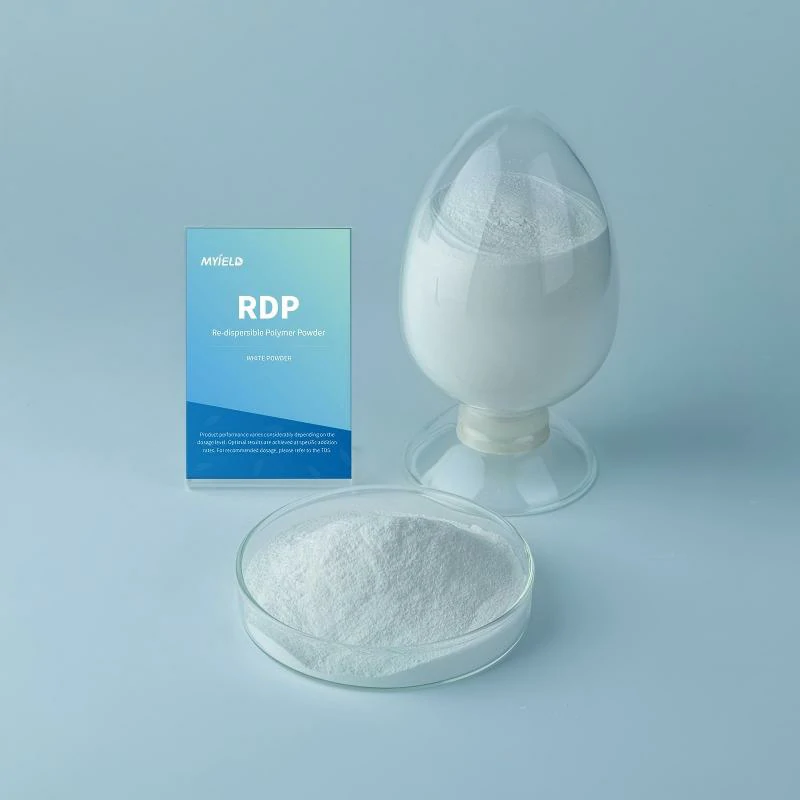
RUNCELL® RDP RE-300SR
- Positioning: RDP option suitable for cementitious mortars; can support bonding and toughness in self-leveling systems (system-dependent)
- Recommended for: Renovation SLC and systems requiring improved adhesion/cohesion
- Formulation value: Improves adhesion and surface integrity direction (trial-based)
- Typical dosage (starting point): 0.4%–1.5% by dry mix weight
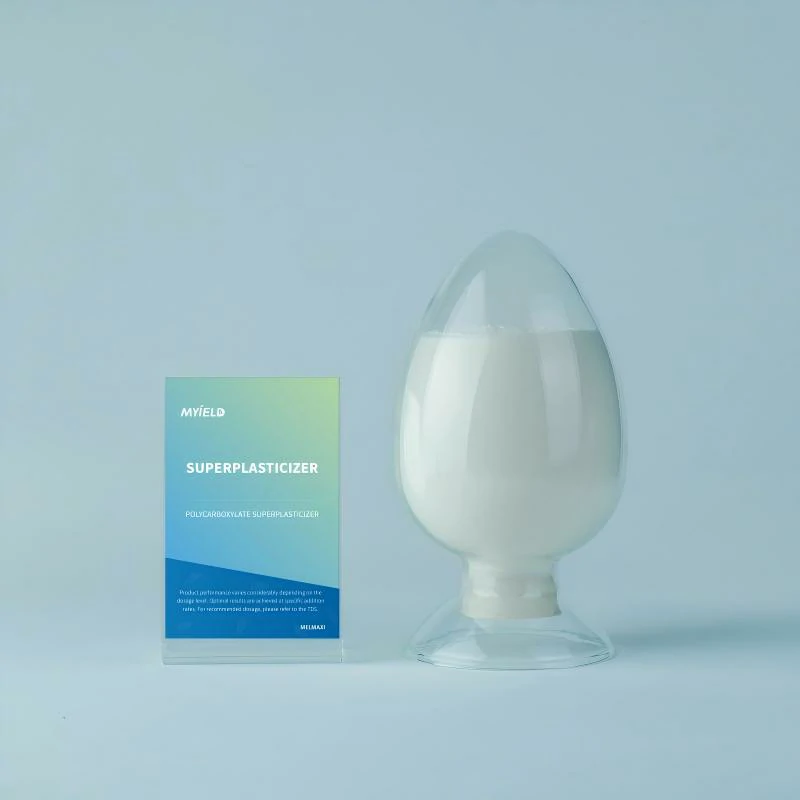
MELMAXI™ PCE P‑3080G (Superplasticizer powder)
- Positioning: PCE water reducer for high-flow mortars and self-leveling systems
- Recommended for: SLC formulations targeting high flow at lower water demand
- Formulation value: Improves dispersion and flow; supports strength direction through reduced water ratio (trial-based)
- Typical dosage (starting point): 0.08%–0.25% by binder weight
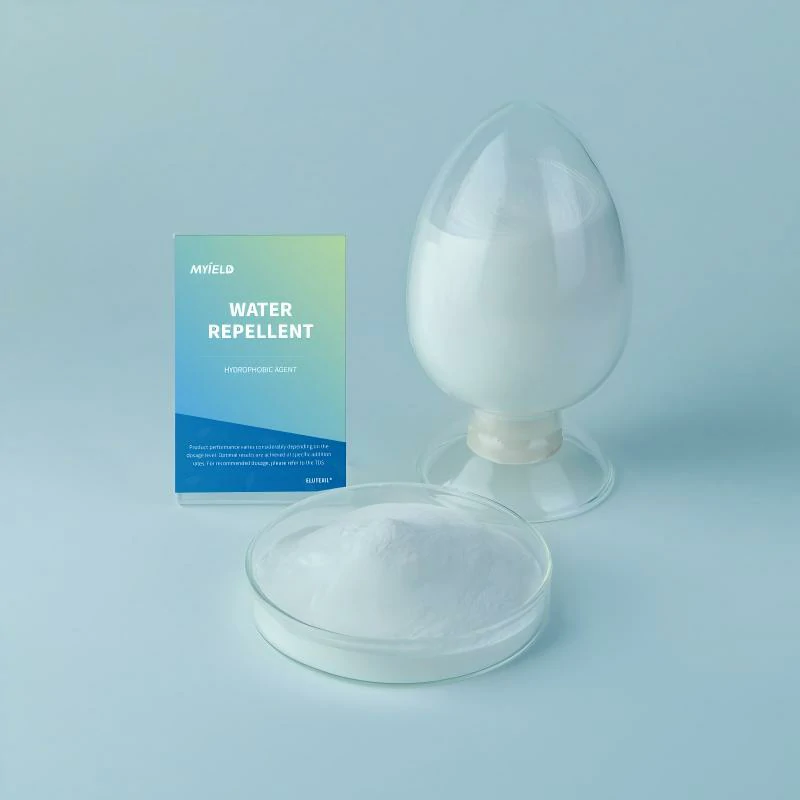
ELUTEXIL® Water Repellent WR‑707E (powder)
- Positioning: Silane-based powder water repellent for reduced water absorption (system-dependent)
- Recommended for: Selected SLC systems where water resistance is required
- Formulation value: Helps reduce capillary absorption while maintaining workable processing direction (trial-based)
- Typical dosage (starting point): 0.15%–0.60% by dry mix weight
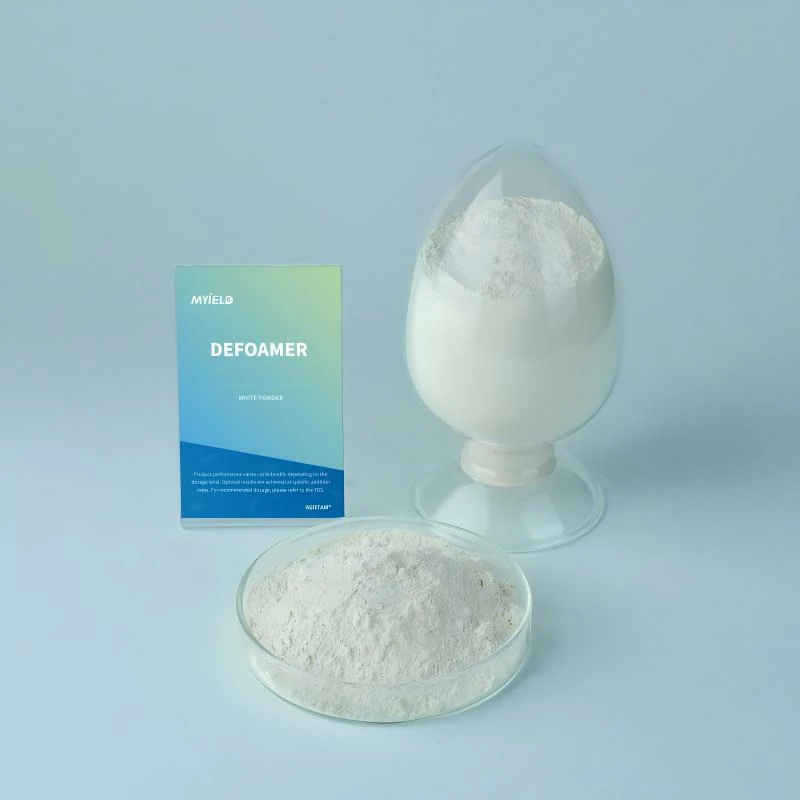
AGIETAM® Defoamer DF‑011 (powder)
- Positioning: Powder defoamer to reduce entrapped air and pinholes
- Recommended for: SLC systems needing improved air release and cleaner finish
- Formulation value: Reduces bubbles/pinholes and improves surface appearance (trial-based)
- Typical dosage (starting point): 0.03%–0.15% by dry mix weight
Why Choose Myield Chemical
FAQ
Self-leveling compounds need high flow. Low-viscosity cellulose ether helps stabilize water and reduce bleeding/segregation without over-thickening the system.
Use an effective defoamer powder, control mixing speed, and keep the rheology stable. Over-dosage of defoamer can also cause instability, so trial optimization is needed.
Not always. In standard underlayments, RDP may be optional. It is commonly used when higher adhesion and toughness are required, especially in renovation systems (system-dependent).
PCE performance depends strongly on cement chemistry and fillers. Start with a low dosage, test flow retention and stability, then adjust to hit your target flow and strength.
In selected systems where reduced water absorption is needed, silane-based powder water repellent can be used, but it should be validated carefully to ensure it does not negatively impact flow or bonding (system-dependent).