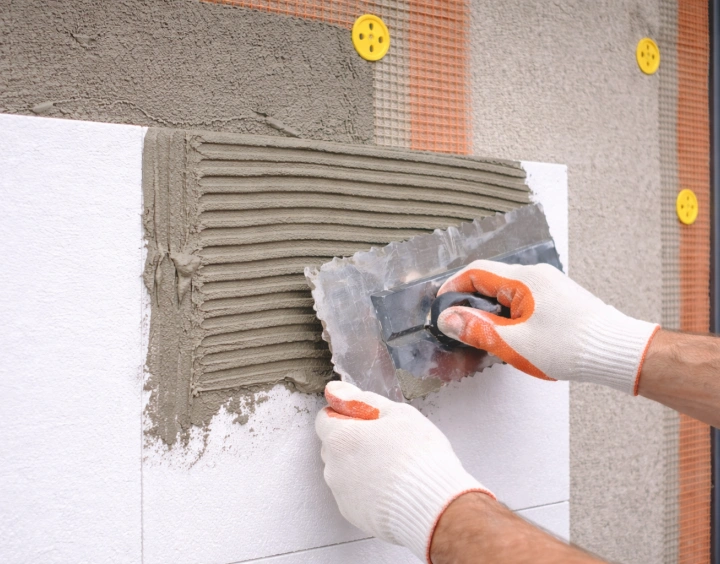




































What Are Industrial Coatings (and Why Cellulose Ethers Matter)?
Industrial coatings include protective and functional coatings for metal, wood, plastics, concrete floors, and industrial equipment—such as primers, anti-corrosion coatings, maintenance coatings, and selected waterborne functional layers. While resin chemistry is the main performance driver, rheology control is essential to keep application and film formation stable. Cellulose ethers (HPMC / MHEC / HEC) are widely used as rheology modifiers in many waterborne systems to help control viscosity, improve flow/leveling balance, and support stable pigment dispersion behavior (system-dependent).
Common Challenges in Industrial Coatings Formulation & Application
Typical issues industrial coating formulators aim to control include:
Sagging or poor edge coverage — insufficient film build control on vertical surfaces (system-dependent)
Poor leveling / orange peel — surface defects and inconsistent appearance
Inconsistent viscosity — shear sensitivity and batch-to-batch variability (system-dependent)
Pigment/filler settling — reduced storage stability and uneven film properties (system-dependent)
Poor spray/roll behavior — spatter, misting, or unstable spray pattern (system-dependent)
Defects during drying — pinholes, craters, or surface irregularities (system-dependent)
Myield Chemical Solution For Industrial Coatings
Cellulose Ethers (HPMC / MHEC / HEC) — rheology control, thickening, and application stability for waterborne industrial coatings (system-dependent).
Cellulose Ethers in Industrial Coatings
A well-selected cellulose ether helps industrial coatings achieve stable viscosity, good workability, and consistent application performance.
Key Benefits:
Typical dosage guidance (starting point): 0.10%–0.50% by total formulation weight (final dosage should be confirmed by trials).
Stronger Results with the Right Additive System
Industrial coatings are highly sensitive to resin chemistry, pigment volume concentration, solvent/water balance, and manufacturing shear. Choosing the right cellulose ether type and viscosity grade helps stabilize processing and application—so the coating lays down more evenly and maintains better film build control (system-dependent).
What Cellulose Ethers Can Deliver (System-Dependent)
tune flow for brush/roller/spray application stability
improved holding on vertical surfaces while maintaining workable flow
supports smoother appearance (system-dependent)
reduced settling tendency and more consistent pigment distribution (system-dependent)
more predictable rheology to reduce batch variability (process-dependent)
Recommended Myield Cellulose Grades for Industrial Coatings
Below are suggested starting grades presented in a product-card layout. Final selection and dosage must be confirmed by trials based on resin chemistry (acrylic, styrene-acrylic, epoxy dispersion, etc.), pigment package, target viscosity profile, and application method.
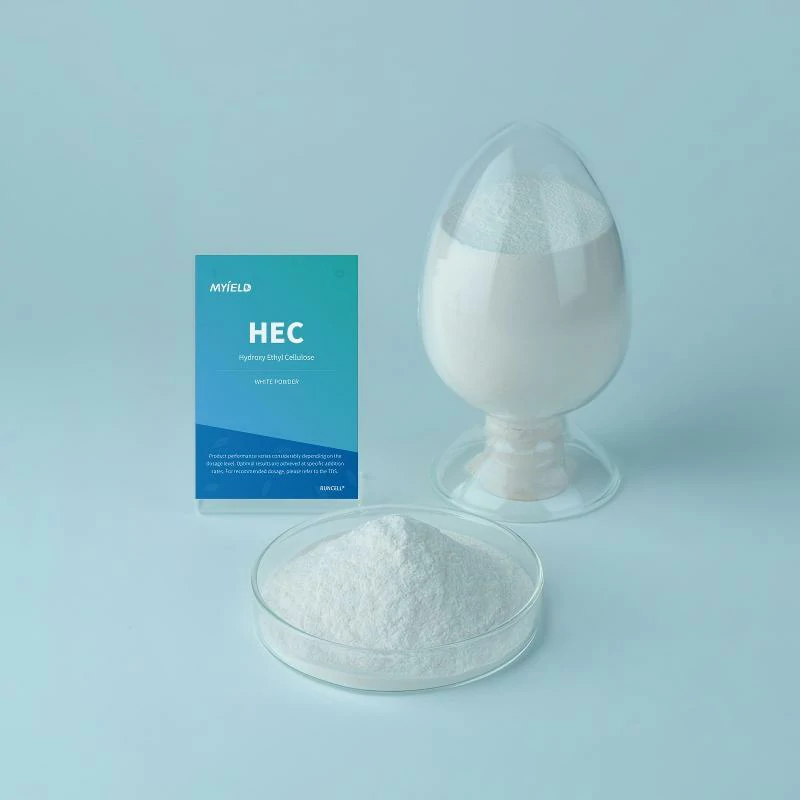
RUNCELL® HEC-30K
- Recommended for: baseline viscosity control and flow tuning in many waterborne coating systems (system-dependent)
- Best for: balanced thickening direction with controlled application feel
- Typical starting dosage: ~0.05%–0.30% in finished coating (trial-based)
RUNCELL® HEC-50K
- Recommended for: systems requiring stronger viscosity build and better film build control direction (system-dependent)
- Best for: improved holding on vertical surfaces direction
- Typical starting dosage: ~0.04%–0.25% in finished coating (trial-based; start low)
RUNCELL® HEC-100K
- Recommended for: higher build systems needing stronger thickening efficiency (system-dependent)
- Best for: high-viscosity targets and stronger sag resistance direction (system-dependent)
- Typical starting dosage: ~0.03%–0.18% in finished coating (trial-based; start low and titrate)
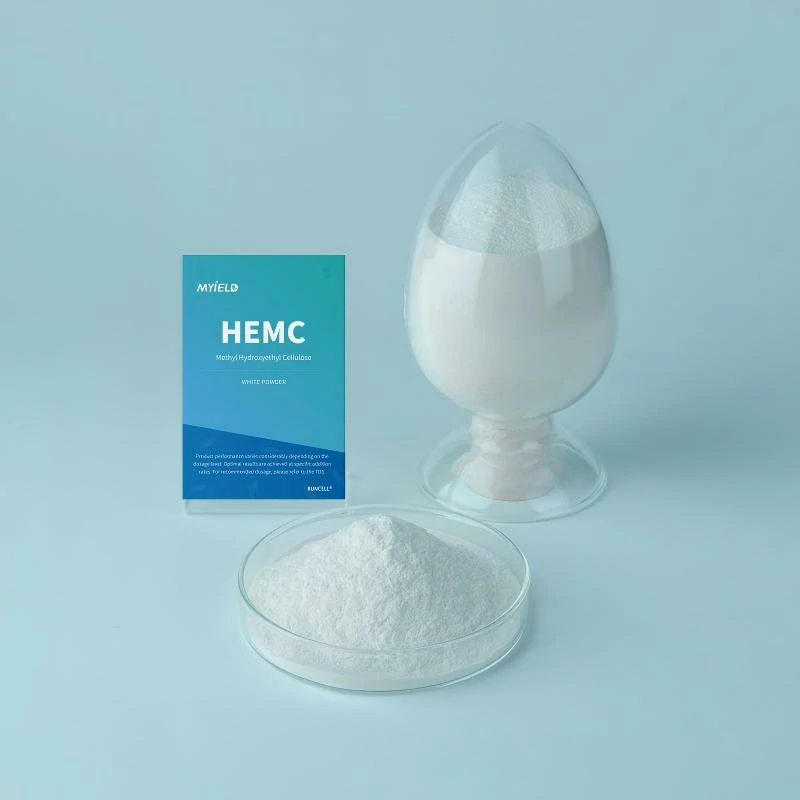
RUNCELL® MHEC KE15(S)
- Recommended for: waterborne coatings needing stable handling and application window direction (system-dependent)
- Best for: practical rheology tuning and improved process consistency direction
- Typical starting dosage: ~0.05%–0.30% in finished coating (trial-based)
RUNCELL® MHEC KE30(S)
- Recommended for: systems requiring higher build and holding direction (system-dependent)
- Best for: stronger viscosity build direction and improved film build control
- Typical starting dosage: ~0.04%–0.25% in finished coating (trial-based)
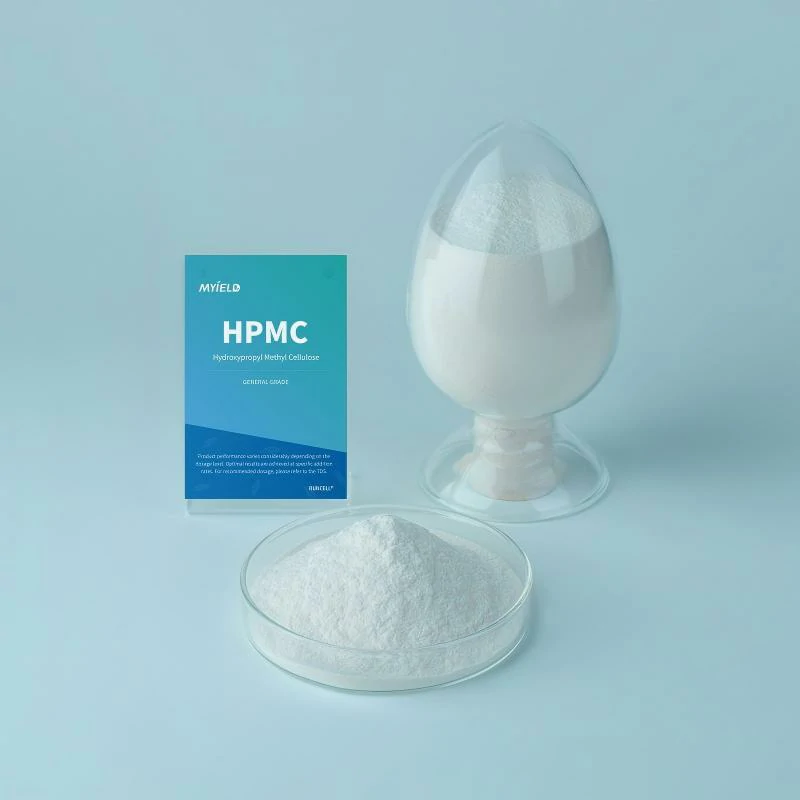
RUNCELL® HPMC KP35
- Recommended for: selected filled or functional coating systems needing stable viscosity build direction (system-dependent)
- Best for: thickening and handling direction where HPMC is compatible with the resin system
- Typical starting dosage: ~0.05%–0.25% in finished coating (trial-based)
Why Choose Myield Chemical
FAQ
Many waterborne coating systems use HEC as a common rheology modifier. MHEC can be evaluated when a different handling or build profile is needed. HPMC may work in selected systems. Final choice depends on resin chemistry and must be confirmed by trials.
Start with a baseline (e.g., HEC-30K) and adjust upward (HEC-50K/100K) when higher build or sag resistance is needed. Confirm with viscosity profile and application tests.
Viscosity profile (KU/ICI), leveling/sag, storage stability (settling), and defect checks (pinholes/craters), plus application method validation.