




















When customers choose HPMC for construction materials, one common question is often asked:
Is higher viscosity HPMC always better?
The answer is: No. Higher viscosity does not always mean better performance. The most suitable viscosity grade is the best choice.
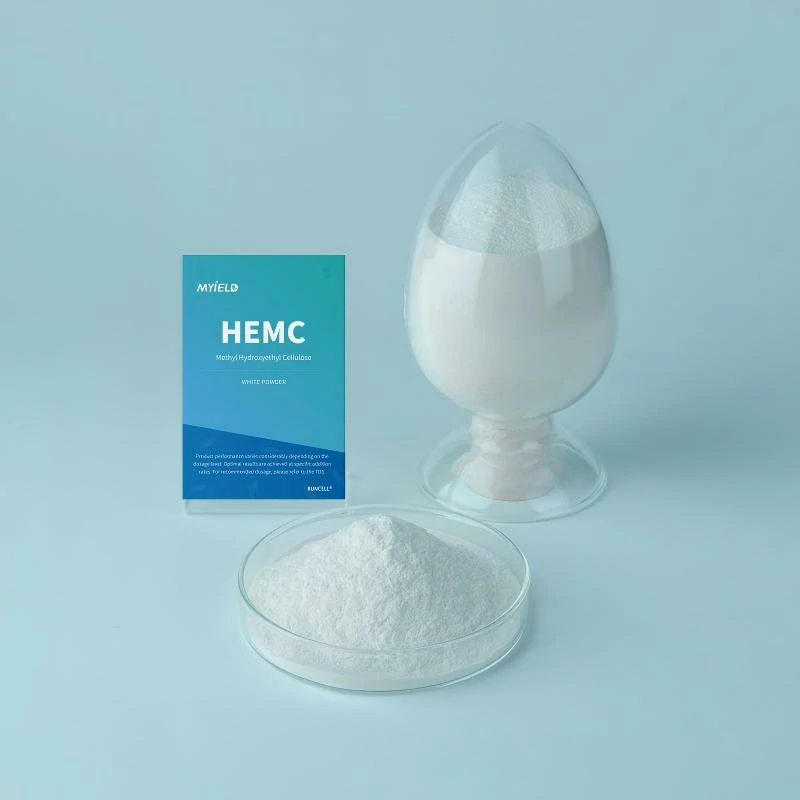
HPMC, also known as Hydroxypropyl Methyl Cellulose, is widely used in dry mix mortar, tile adhesive, wall putty, skim coat, gypsum-based products, cement-based materials, and other construction chemical formulations. It plays an important role in water retention, workability, adhesion, open time, anti-sagging performance, and overall construction quality.
However, different application systems require different viscosity levels. Choosing the wrong viscosity may lead to poor workability, difficult mixing, slow dissolution, or unstable final performance.
What Does HPMC Viscosity Mean?
The viscosity of HPMC mainly reflects the thickness of its aqueous solution. In general, higher viscosity HPMC can form a thicker solution and provide stronger water retention and thickening effects.
For construction materials, this can help improve:
- Water retention
- Workability
- Adhesion
- Anti-sagging performance
- Open time
- Surface smoothness
- Construction stability
This is why high viscosity HPMC is often used in products where better construction performance is required.
When Is High Viscosity HPMC Suitable?
High viscosity HPMC is commonly used in construction materials such as:
1. Wall Putty and Skim Coat
In wall putty and skim coat formulations, HPMC helps improve water retention, smooth application, and surface finishing. A suitable high viscosity grade can prevent the material from drying too quickly, giving workers enough time for application and adjustment.
2. Tile Adhesive
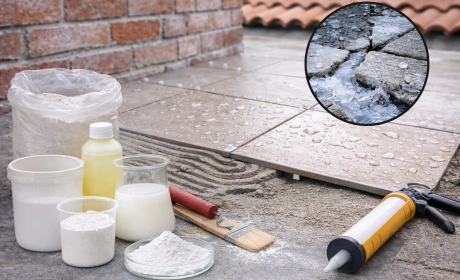
For tile adhesive, HPMC improves water retention, open time, slip resistance, and bonding performance. If the mortar loses water too quickly, cement hydration may be affected, which can reduce adhesion strength. A proper HPMC grade helps keep the system stable during construction.
3. Cement-Based Mortar
In cement mortar, HPMC improves workability and helps reduce water loss into the substrate. This is especially important in hot weather, dry environments, or highly absorbent base surfaces.
4. Gypsum-Based Products
For gypsum plaster and related gypsum-based materials, HPMC can improve consistency, smoothness, and working time. The right viscosity grade helps the product maintain good application performance without making the mixture too heavy or difficult to spread.
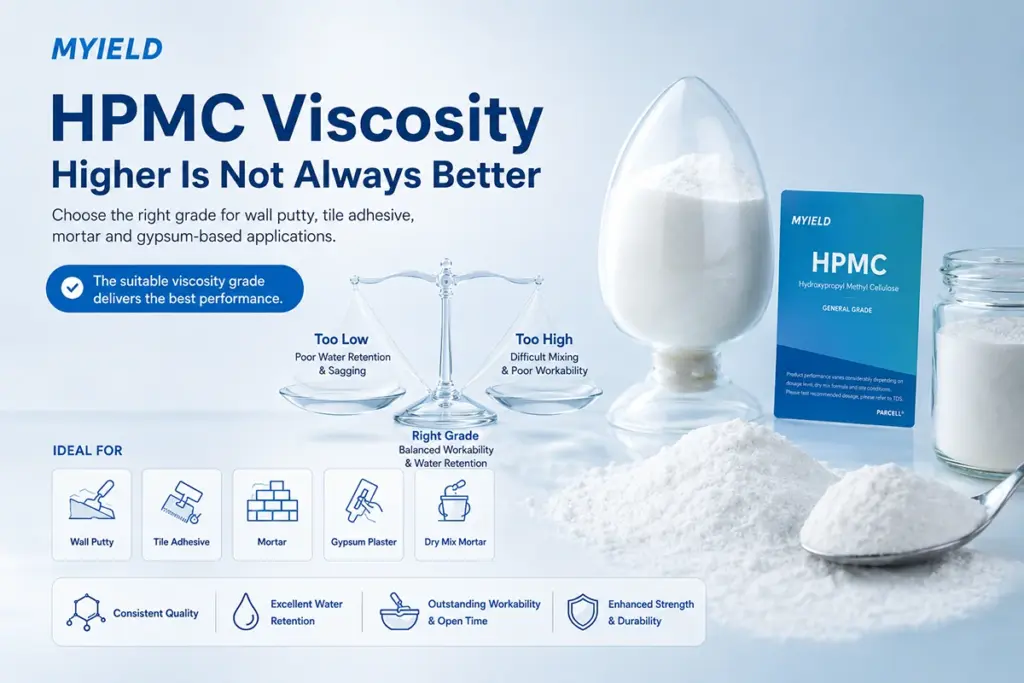
Why Is Higher Viscosity Not Always Better?
Although high viscosity HPMC has strong water retention and thickening ability, excessive viscosity may bring several problems.
1. Difficult Mixing
If the viscosity is too high, the formulation may become too thick during mixing. This can make dispersion more difficult and increase the risk of lumps or uneven distribution.
2. Poor Workability
Construction materials need a balance between thickness and ease of application. If the system is too viscous, workers may feel the mortar is sticky, heavy, or difficult to spread.
3. Higher Formulation Cost
Using a higher viscosity grade than necessary may increase formulation cost without bringing meaningful performance improvement. In many cases, a medium viscosity HPMC grade may already meet the application requirements.
4. Possible Impact on Final Product Performance
Excessive viscosity may affect flow, leveling, spreading, or finishing performance. For some systems, too much thickening can reduce construction efficiency or cause an unsatisfactory surface effect.
Different Applications Need Different HPMC Viscosity Grades
The right HPMC viscosity should be selected according to the specific application, raw material system, construction method, climate conditions, and final performance requirements.
For example:
- Wall putty usually needs good water retention, smooth workability, and easy polishing.
- Tile adhesive needs open time, slip resistance, and bonding support.
- Gypsum plaster needs good consistency, smooth application, and stable working time.
- Self-leveling mortar requires better fluidity, so extremely high viscosity may not be suitable.
- Spray mortar requires good pumpability and spray stability, so viscosity must be carefully balanced.
This means there is no single HPMC viscosity grade suitable for every product.
How to Choose the Right HPMC for Your Formula
When selecting HPMC, customers should not only look at viscosity. A good HPMC solution should consider the complete performance of the formulation.
Important factors include:
- Viscosity grade
- Water retention performance
- Dissolution speed
- Gel temperature
- Particle size
- Workability
- Compatibility with cement, gypsum, fillers, and additives
- Application temperature and humidity
- Required open time and final strength
For construction chemical manufacturers, choosing the right HPMC grade can help improve product quality, reduce formulation risk, and create more stable performance in different jobsite conditions.
Myield Chemical HPMC Solutions for Construction Applications
Myield Chemical supplies HPMC products for dry mix mortar and construction chemical applications, including wall putty, tile adhesive, skim coat, gypsum plaster, cement mortar, and other building material systems.
Our HPMC products can help improve water retention, consistency, workability, adhesion, and construction performance. According to different customer requirements, we can help recommend suitable viscosity grades and formulation solutions.
Whether you need HPMC for high water retention, easy application, better open time, improved anti-sagging performance, or balanced workability, Myield Chemical can provide technical support based on your actual application.
Conclusion: Suitable Viscosity Is Better Than Higher Viscosity
For HPMC, higher viscosity is not always better.
The key is to choose the most suitable viscosity grade according to the product system and application requirements. A suitable HPMC grade can improve construction performance, maintain stable quality, and help customers achieve better formulation results.
If you are not sure which HPMC viscosity grade is suitable for your product, Myield Chemical can help you evaluate your application and recommend a proper solution.
Looking for the right HPMC for wall putty, tile adhesive, skim coat, gypsum plaster, or dry mix mortar?
Contact Myield Chemical today for product recommendations, samples, and technical support.
Contact Myield Chemical
WhatsApp: +86-18538509097
Email: [email protected]