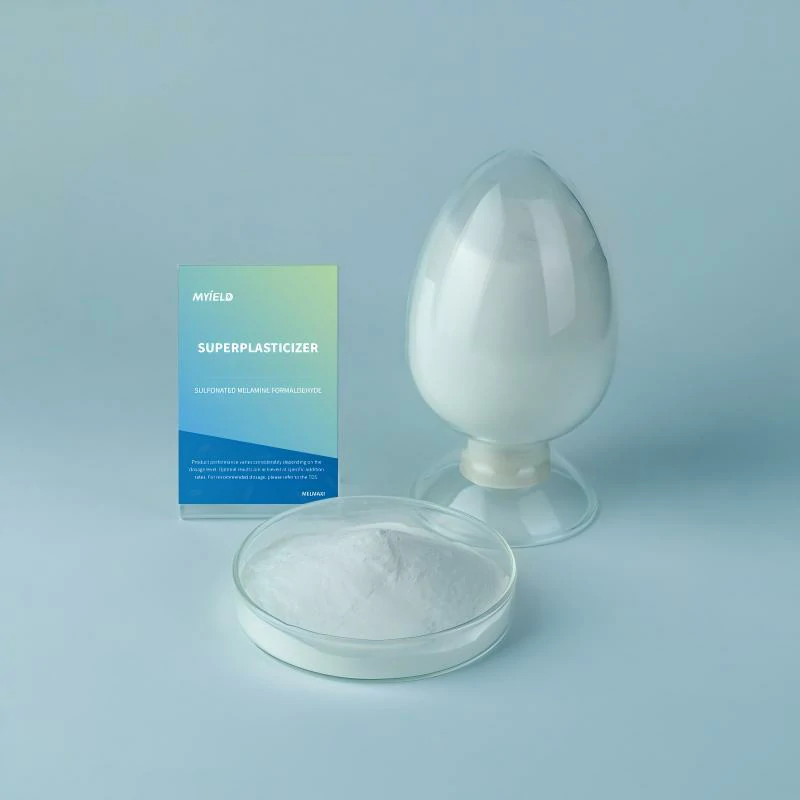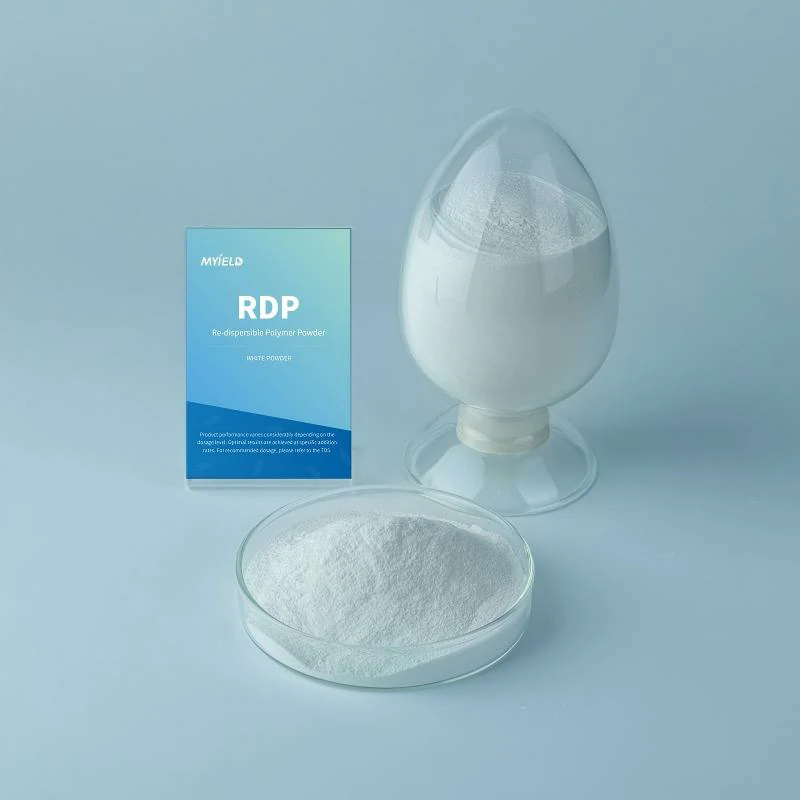



























In the global construction materials market, concrete additives have become an important part of modern concrete production. For overseas buyers, contractors, ready-mix concrete producers, and building material manufacturers, the purpose of using additives is very clear: improve concrete performance, reduce production problems, and achieve more stable results.
However, when sourcing concrete additives from an international supplier, buyers are not only concerned about technical specifications. They also care about product consistency, application suitability, supply stability, packaging, delivery time, and whether the supplier can provide practical support.
At Myield Chemical, we work with customers from different markets and understand that the right product should match the actual application, rather than simply offering the highest specification.
Why Are Concrete Additives Important?
Concrete may look simple, but its final performance can be affected by many factors, including cement quality, water-cement ratio, aggregates, temperature, transportation time, and construction conditions.
The right concrete additives can help improve:
- Workability and flowability
- Water reduction
- Early and final strength
- Slump retention
- Crack resistance
- Pumping performance
- Surface quality
- Overall durability
For concrete producers, better performance also means fewer production problems and more stable quality between batches.
PCE Superplasticizer for Better Flow and Water Reduction
Among different types of concrete additives, Polycarboxylate Ether Superplasticizer, or PCE Superplasticizer, is widely used in modern concrete.
Its main function is to improve concrete flowability while reducing water demand. Compared with simply adding more water, PCE can help maintain a lower water-cement ratio, which is important for strength and durability.
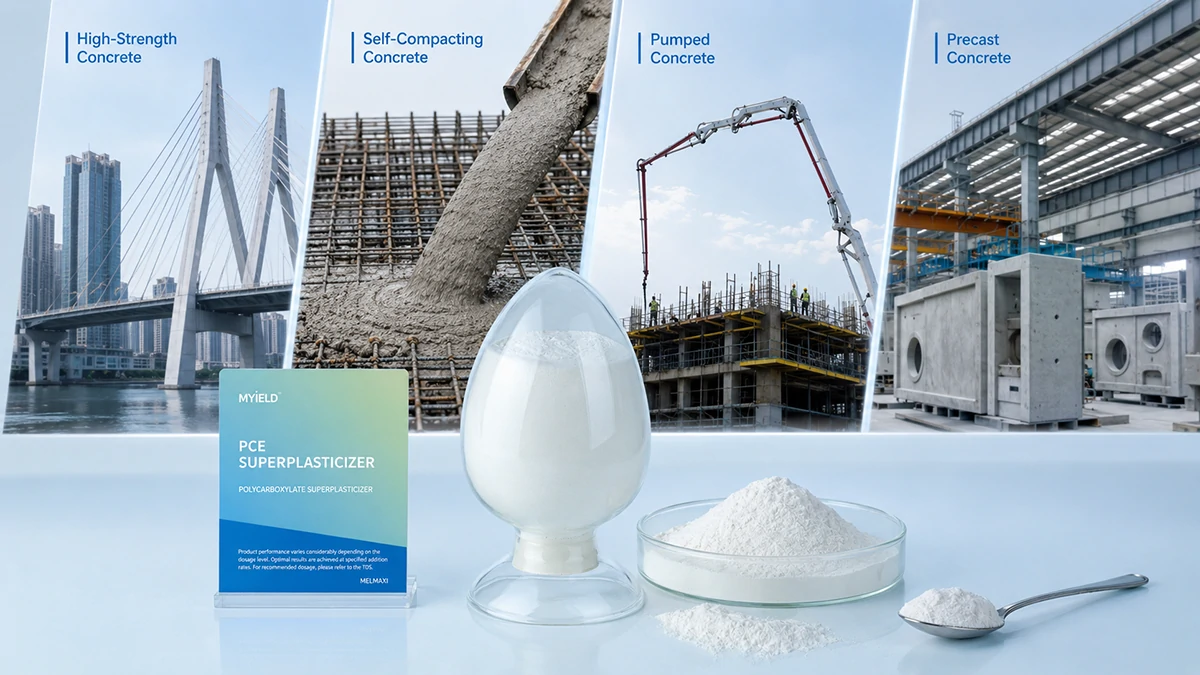
PCE is commonly used in:
- Ready-mix concrete
- Precast concrete
- High-strength concrete
- Self-compacting concrete
- Pumped concrete
- High-performance concrete
Different projects may require different PCE performance. Some customers focus more on water reduction, while others pay more attention to slump retention, early strength, or compatibility with local cement.
This is why product selection should be based on real application conditions.
PP Fiber for Crack Control
Cracking is another common problem in concrete and mortar systems.
Polypropylene Fiber, or PP Fiber, is a practical additive used to help control plastic shrinkage cracks and improve the overall stability of cement-based materials.
It is commonly used in concrete floors, pavements, tunnels, precast products, repair mortars, and general construction applications.
For many overseas customers, PP fiber is attractive because it is easy to use, requires a relatively small dosage, and can be added directly during mixing.
Defoamer for Better Surface and Density
During concrete or mortar production, excessive air bubbles may cause pinholes, surface defects, lower density, and unstable mechanical performance.
A suitable defoamer can help reduce unwanted foam and improve the compactness and appearance of the final product.
This is especially important when a formulation contains several chemical additives or polymer-based materials.
Product Compatibility Is More Important Than Specification Alone
From our experience in international trade, one of the most common purchasing mistakes is choosing a concrete additive only by comparing specifications or prices.
In reality, the same additive may perform differently with different cement types and raw materials.
For example, a PCE product that performs well with one cement may show rapid slump loss or excessive retardation with another cement.
Therefore, before placing a large order, we normally recommend that customers provide basic information such as:
- Concrete application
- Cement type
- Target performance
- Current dosage
- Existing formulation problems
- Estimated order quantity
With this information, it is easier to recommend a suitable grade and arrange sample testing if necessary.
What Should Overseas Buyers Consider When Choosing a Supplier?
For international buyers, product quality is only one part of the decision.
A reliable concrete additive supplier should also be able to provide stable supply, clear technical documents, suitable packaging, export experience, and efficient communication.
In international business, consistency is particularly important. Buyers need the product received in the second or third shipment to perform as consistently as the first shipment.
That is why we believe long-term cooperation should be built on stable products, transparent communication, and practical technical support.
Find the Right Concrete Additive for Your Application
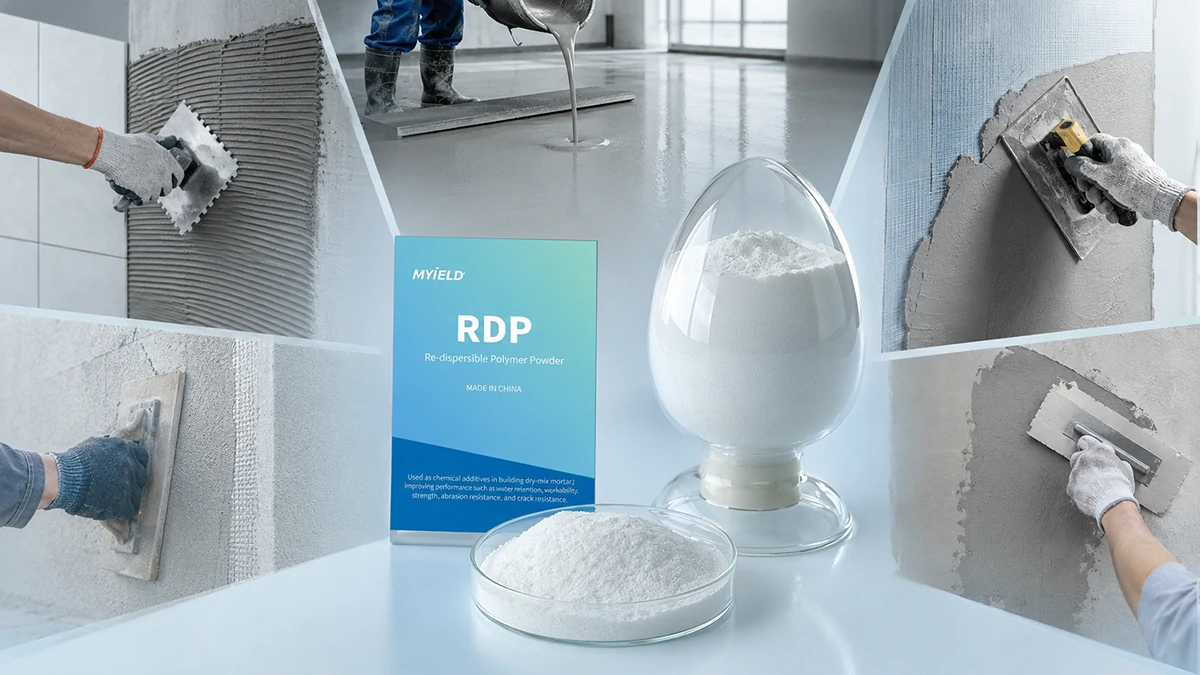
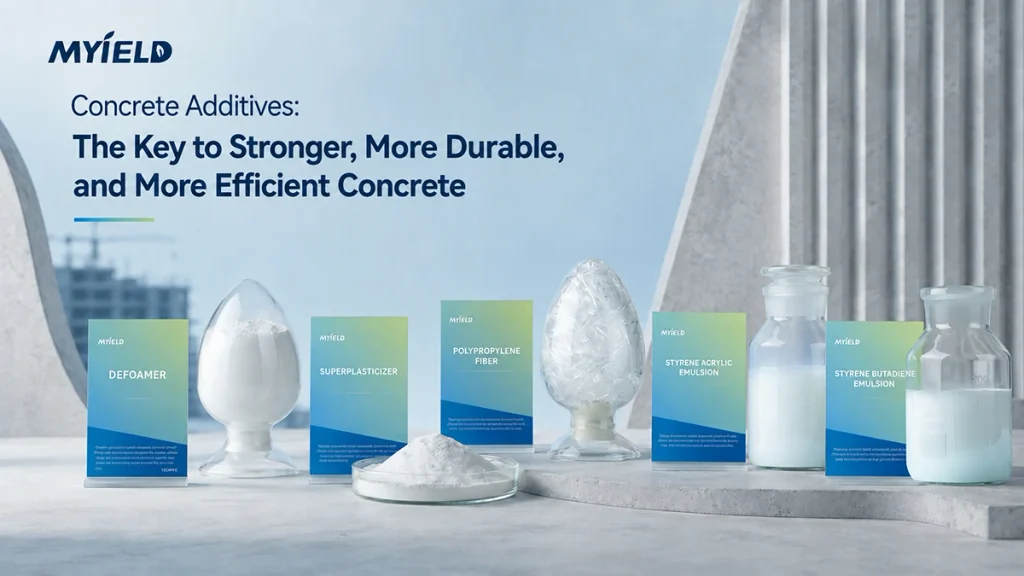
At Myield Chemical, we supply a range of construction chemical materials for concrete and cement-based applications, including PCE Superplasticizer, PP Fiber, Defoamer, SBR Latex, Styrene Acrylic Emulsion, Cellulose Ether, and other functional additives.
If you are currently looking for concrete additives from China, tell us what product you are using, your application, and what performance you want to improve.
Our team can help recommend a more suitable solution based on your actual requirements.
Email: [email protected]
WhatsApp: +86-18538509097
Send us your application details and estimated demand, and we will help you find the right concrete additive solution for your market.