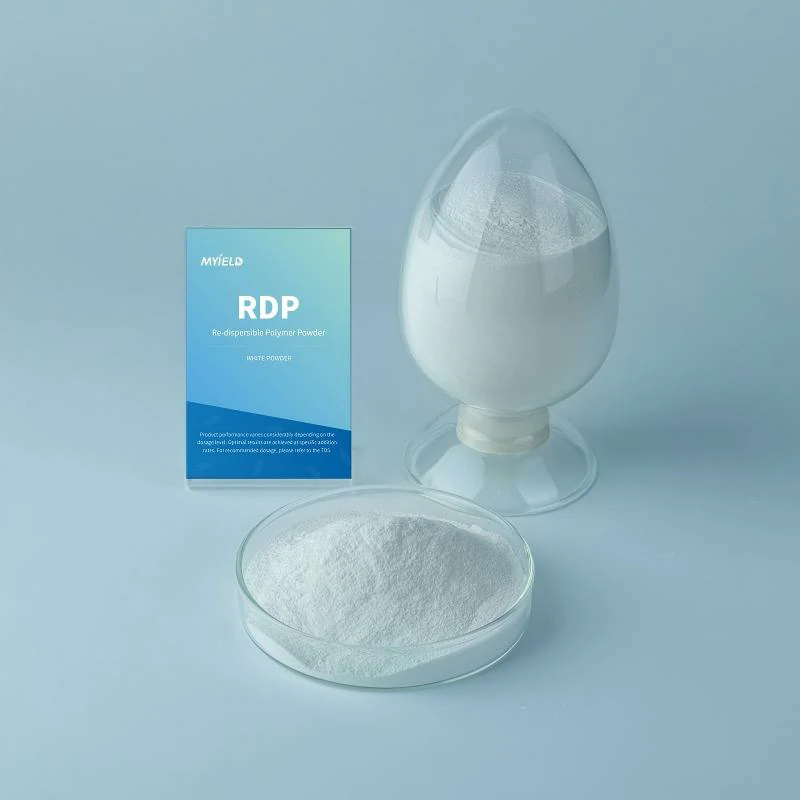
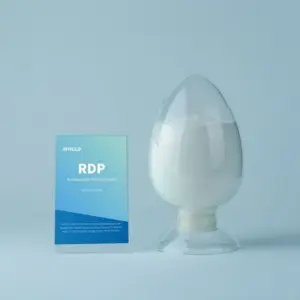
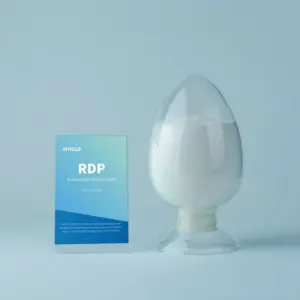
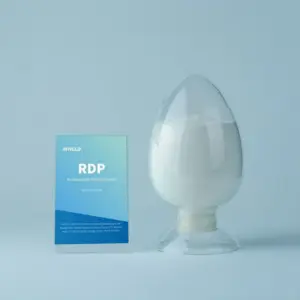
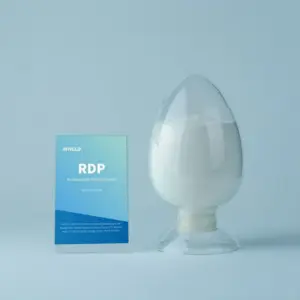
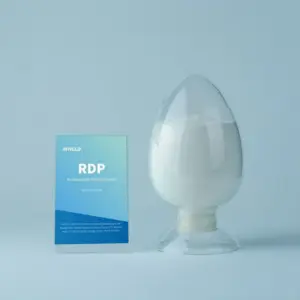
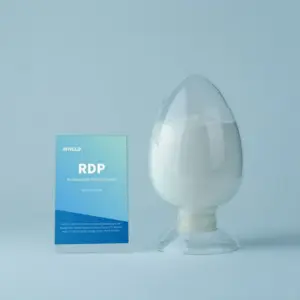




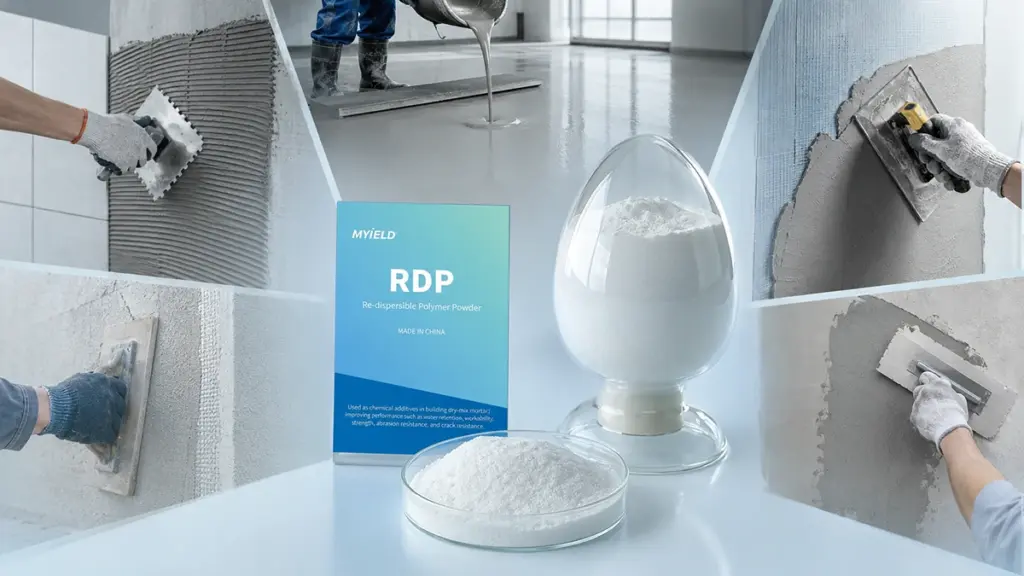
Brief Introduction: Redispersible Polymer Powder, also called RDP Powder, is a key polymer additive used in cement-based and gypsum-based dry-mix mortar. After mixing with water, it can redisperse into a polymer emulsion and form a flexible film during mortar curing.
This polymer film helps improve adhesion, cohesion, flexibility, crack resistance, water resistance, abrasion resistance and workability. For tile adhesive, wall putty, skim coat, self-leveling mortar, EIFS mortar, waterproof mortar and repair mortar, choosing the right RDP grade can directly affect final product performance.
At Myield Chemical, we provide different RDP Powder solutions according to application type, formulation system and customer performance requirements.
1. Why RDP Powder Is Important in Dry-Mix Mortar
Cement, gypsum, sand and fillers can provide strength, but the hardened mortar structure is usually rigid and brittle. This may cause poor flexibility, weak adhesion on difficult substrates and higher cracking risk.
RDP Powder helps solve these problems.
When dry mortar is mixed with water, RDP particles quickly redisperse into a polymer emulsion. As water is absorbed by the substrate, consumed by cement hydration or evaporated from the surface, polymer particles gradually come together and form a continuous film inside the mortar.
This film works like a flexible bridge between cement particles, fillers, aggregates and substrate surfaces.
RDP Powder can help improve:
- Adhesion strength
- Internal cohesion
- Flexural strength
- Crack resistance
- Abrasion resistance
- Water resistance
- Workability and application performance
For modern dry-mix mortar, RDP is not only a supporting additive. It is often one of the key materials that decides whether the final product can meet market requirements.
2. How Different Myield RDP Powder Types Affect Performance
Redispersible Polymer Powder is generally produced through two main steps: emulsion polymerization and spray drying.
During emulsion polymerization, different monomers are polymerized into an emulsion. The polymer composition, glass transition temperature and film-forming ability decide the final performance direction of the RDP Powder.
After that, the emulsion is spray-dried into a free-flowing powder. During mortar mixing, this powder can redisperse in water and recover many of the original polymer emulsion properties.
At Myield Chemical, our RDP Powder range is designed according to different dry-mix mortar applications and polymer performance requirements.
Adhesive EVA RDP Powder
Adhesive EVA RDP Powder is mainly used to improve bonding strength in tile adhesive, wall putty, skim coat, EIFS bonding mortar and repair mortar.
It offers good redispersibility, strong adhesion and reliable compatibility with cement, gypsum, cellulose ether and other mortar additives. For standard dry-mix mortar requiring better bonding performance, this is one of the most commonly selected types.
Flexible EVA RDP Powder
Flexible EVA RDP Powder is designed for mortar systems requiring better flexibility, deformation resistance and crack resistance.
It helps reduce the brittleness of cement-based mortar and improves the ability of the mortar layer to absorb stress. It is suitable for exterior wall systems, flexible putty, anti-crack mortar, insulation mortar and other applications exposed to movement or temperature change.
Self-Leveling EVA RDP Powder
Self-leveling EVA RDP Powder is used in self-leveling mortar and flooring compounds.
In these systems, mortar needs good flowability, smooth leveling, surface strength and stable bonding to the substrate. This type of RDP helps improve cohesion, reduce surface defects and support better final floor performance.
Waterproofing EVA RDP Powder
Waterproofing EVA RDP Powder is developed for mortar systems where lower water absorption and better moisture resistance are required.
It helps form a more water-resistant polymer film inside the mortar structure, improving durability and reducing water penetration. Typical applications include waterproof mortar, exterior wall mortar, repair mortar and wet-area construction materials.
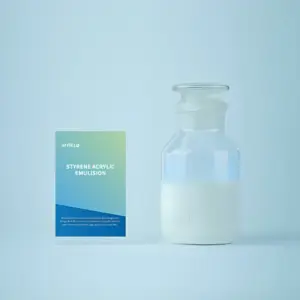
Styrene-Acrylic (SA) RDP Powder
Styrene-Acrylic RDP Powder is suitable for applications requiring good water resistance, weather resistance and surface durability.
Compared with standard EVA-based grades, SA RDP can provide a different balance of hardness, hydrophobicity and durability. It is often used in exterior wall systems, decorative mortar, waterproof mortar and other applications where long-term outdoor performance is important.
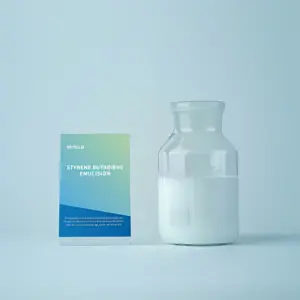
Styrene-Butadiene (SBR) RDP Powder
Styrene-Butadiene RDP Powder is designed for mortar systems requiring strong flexibility, toughness and improved bonding performance.
SBR-type RDP can help improve impact resistance, crack resistance and adhesion to different substrates. It is suitable for repair mortar, flexible mortar, bonding mortar and some specialty dry-mix formulations.
Besides polymer type, two technical indicators are also important: Tg and MFT.
Tg, or glass transition temperature, affects polymer hardness, flexibility and powder stability. A higher Tg can improve anti-blocking performance during drying and storage, but may reduce low-temperature film-forming ability.
MFT, or minimum film-forming temperature, affects whether the polymer can form a continuous film at lower construction temperatures. If MFT is too high, the RDP may not form a complete film in cold environments, which may affect adhesion and flexibility.
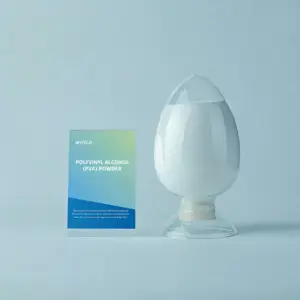
During spray drying, protective colloids are usually added to prevent polymer particles from sticking together. Polyvinyl alcohol, also known as PVA, is commonly used as a protective colloid to support powder stability and redispersibility.
A well-designed RDP Powder should provide:
- Fast redispersibility in water
- Good powder flowability
- Stable storage performance
- Reliable film-forming ability
- Good compatibility with cement, gypsum and mortar additives
- Consistent performance in real mortar testing
This is why different RDP Powder types should be selected according to the final application, not only by price or basic polymer name.
3. How to Choose RDP Powder for Different Applications
Different dry-mix mortar products require different RDP performance. The right grade should match the application, substrate, climate and final performance target.
For Tile Adhesive
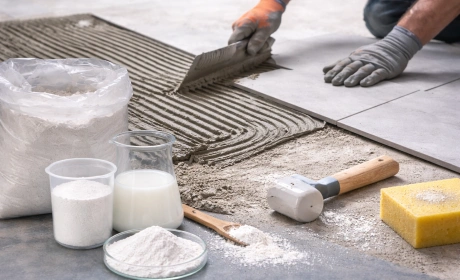
Tile adhesive needs strong bonding strength, good workability and stable performance after curing. For low-absorption tiles, vitrified tiles or smooth substrates, cement alone may not provide enough adhesion.
RDP Powder improves bonding through polymer film formation, especially on difficult surfaces.
Key requirements include:
- High adhesion strength
- Good open time
- Better slip resistance support
- Water-resistant bonding
- Compatibility with cellulose ether
For Wall Putty and Skim Coat
Wall putty and skim coat require smooth application, good surface strength and crack resistance.
RDP Powder improves cohesion and flexibility, helping reduce cracking, powdering and weak adhesion.
Key requirements include:
- Better bonding to substrate
- Improved surface strength
- Good flexibility
- Lower water absorption
- Stable exterior durability
For Self-Leveling Mortar
Self-leveling mortar needs good flowability, leveling performance, surface strength and bonding to the substrate.
Self-leveling EVA RDP Powder can help improve the internal cohesion of the flooring system and reduce problems such as surface weakness, cracking or poor bonding.
Key requirements include:
- Good leveling performance
- Strong substrate adhesion
- Improved surface strength
- Reduced cracking risk
- Stable compatibility with cement and gypsum systems
For EIFS / ETICS Mortar
EIFS bonding mortar and base coat mortar require strong adhesion to EPS or XPS insulation boards. These boards have low water absorption, so mechanical anchoring from cement is limited.
RDP Powder provides polymer bonding and improves flexibility.
Key requirements include:
- Strong adhesion to insulation boards
- Good crack resistance
- Stable flexibility
- Better resistance to temperature changes
For Waterproof and Repair Mortar
Waterproof mortar needs lower water absorption and better moisture resistance. Repair mortar needs strong bonding to old concrete or existing mortar surfaces.
Waterproofing EVA RDP, SA RDP or SBR RDP can be selected according to the target performance.
Key requirements include:
- Lower water absorption
- Better bonding to old substrate
- Improved flexural strength
- Better durability
- Reduced cracking risk
Next Step: Ask Myield Chemical for the Right RDP Recommendation
The best RDP Powder is not always the most expensive grade. The right choice depends on your formulation, local raw materials, application method, climate conditions and target performance.
Before selecting RDP Powder, you can first confirm:
- What product are you producing?
- What performance problem do you want to solve?
- What is your current formulation system?
- What construction temperature and substrate type are common in your market?
Myield Chemical provides RDP Powder solutions for tile adhesive, wall putty, skim coat, self-leveling mortar, EIFS mortar, waterproof mortar, repair mortar and other dry-mix applications.
If you are looking for a reliable RDP Powder supplier, contact Myield Chemical with your application and target performance requirements. Our team can help recommend a suitable grade and support your formulation testing.