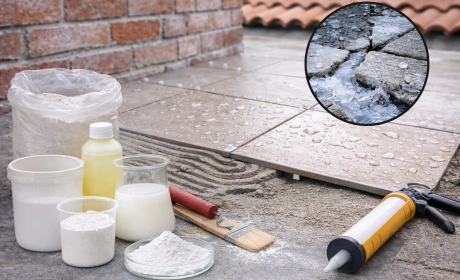


























Summary: In cement-based tile adhesives, cellulose ethers help contractors achieve smoother handling, longer open time, better anti-sag behavior, and more reliable bonding—mainly through water retention and rheology control.
1) What are cellulose ethers in tile adhesives?
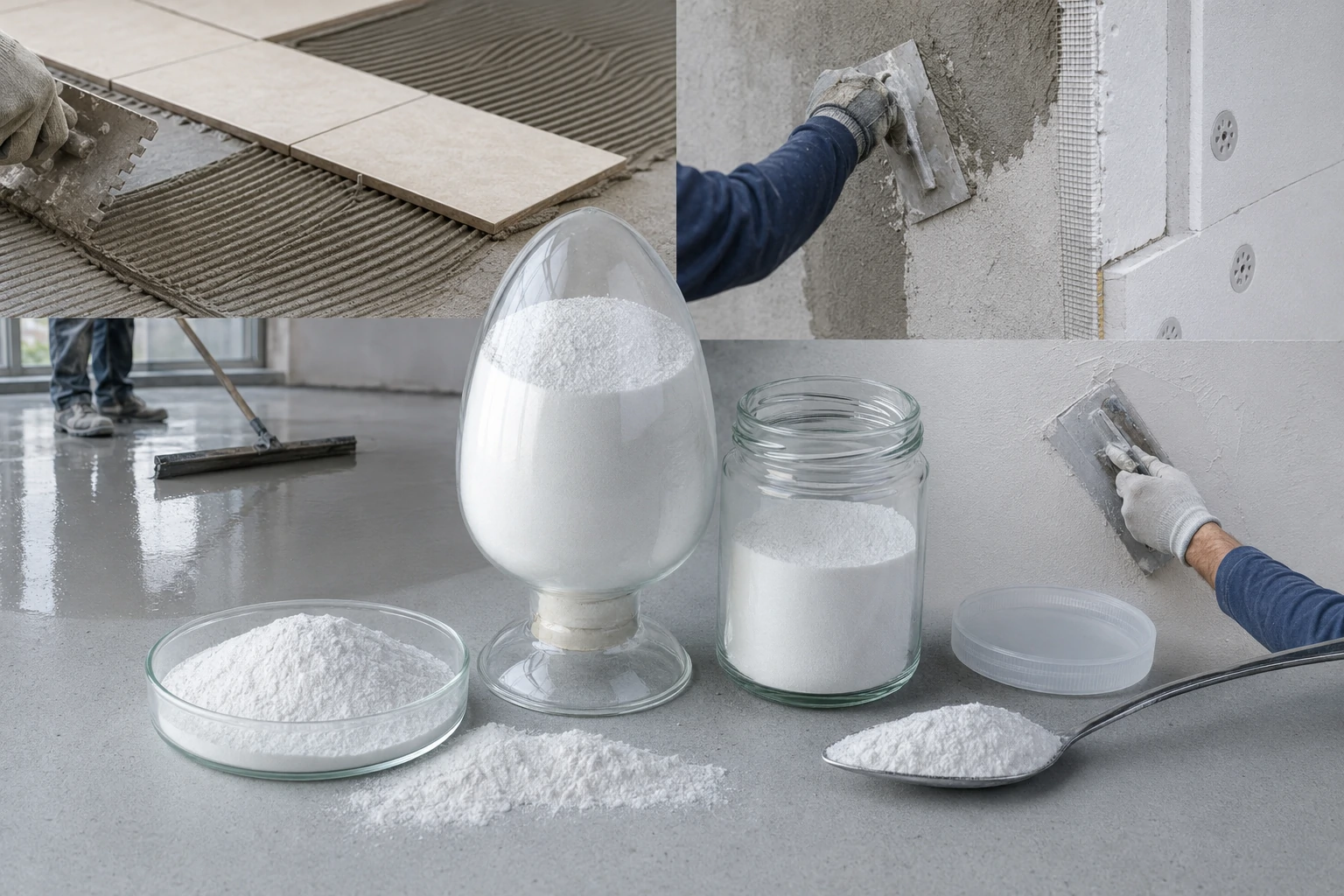
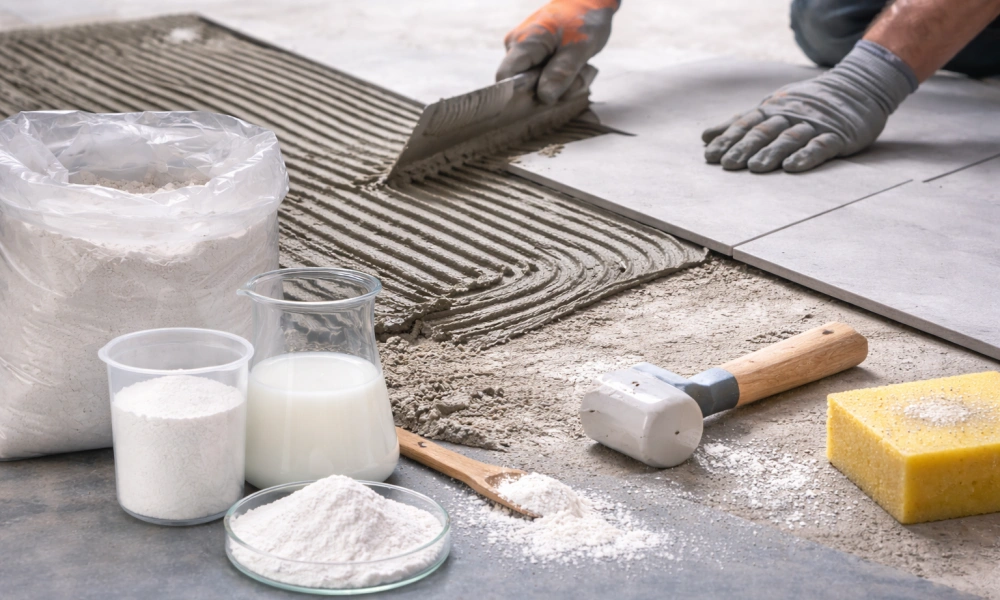
Cellulose ethers are water-soluble polymers derived from natural cellulose. In dry-mix tile adhesives, they are commonly used to control the “fresh mortar” behavior—how the adhesive mixes, spreads, holds a combed ridge, and supports consistent cement hydration.
2) Workability: creamy mixing, smooth troweling, stable ridges
Tile adhesive performance on site is often judged first by workability. Cellulose ethers increase viscosity and improve thixotropy: the mortar spreads easily under trowel shear, then rebuilds structure to keep ridges stable after combing.
Typical improvements include:
3) Anti-sag / reduced slip: helping tiles stay in place
For vertical installations, slip resistance matters. Under EN 12004 classification, “reduced slip” is denoted by the letter T, and a commonly referenced requirement is that the downward movement of a tile on a vertical, combed adhesive layer must be no more than 0.5 mm.
4) Bonding reliability: water retention supports hydration and interface contact
Bond strength depends on hydration and intimate contact at the interface. On absorptive substrates or in hot/windy conditions, water can be pulled from fresh adhesive, reducing hydration and early bonding. Water retention is therefore a key mortar property: it helps prevent rapid water loss into the substrate by suction, supporting more uniform hydration and stable bond development.
5) Open time and adjustability: keeping the adhesive workable longer
Open time is the interval after spreading during which tiles can still be embedded while meeting adhesion requirements. In EN 12004 discussions, “E” (extended open time) is commonly associated with meeting tensile adhesion requirements after 30 minutes, while standard open time is often referenced at 20 minutes. By reducing surface drying and controlling moisture loss, cellulose ethers are one of the key levers to achieve longer open time in practice.
6) Formulation balance: choose the right grade and dosage
Cellulose ethers are powerful, and performance depends on selecting the right viscosity/grade and dosage for your recipe (cement type, fillers, polymers, and jobsite conditions). Literature also notes that cellulose ethers can influence hydration kinetics (often showing some retardation), so tile adhesive design is always a balance between workability/open time and strength development.
Practical takeaway
If your goal is a tile adhesive that spreads smoothly, keeps a stable ridge, resists sag on walls, and delivers reliable bonding across changing site conditions, cellulose ethers are among the most important additives—mainly through rheology control and water retention.