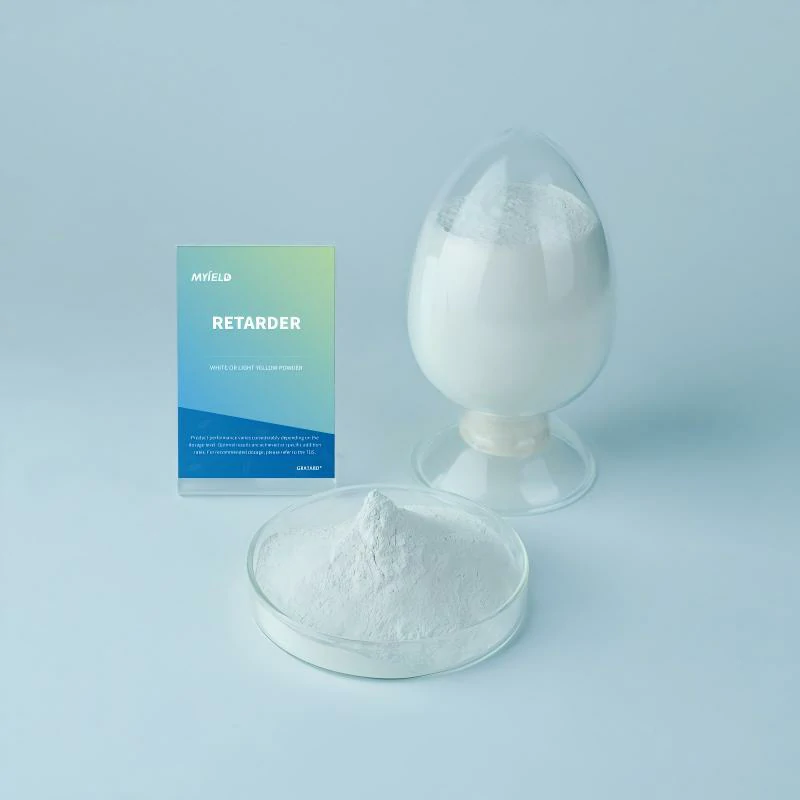































Gypsum-based products can set quickly, leaving little time for mixing, pumping, leveling, and finishing. A gypsum retarder is a specialty additive used to slow gypsum hydration so you can control setting time and keep application quality consistent. For Myield Chemical, this is exactly what the GRATARD™ Gypsum Retarder series is designed to do.
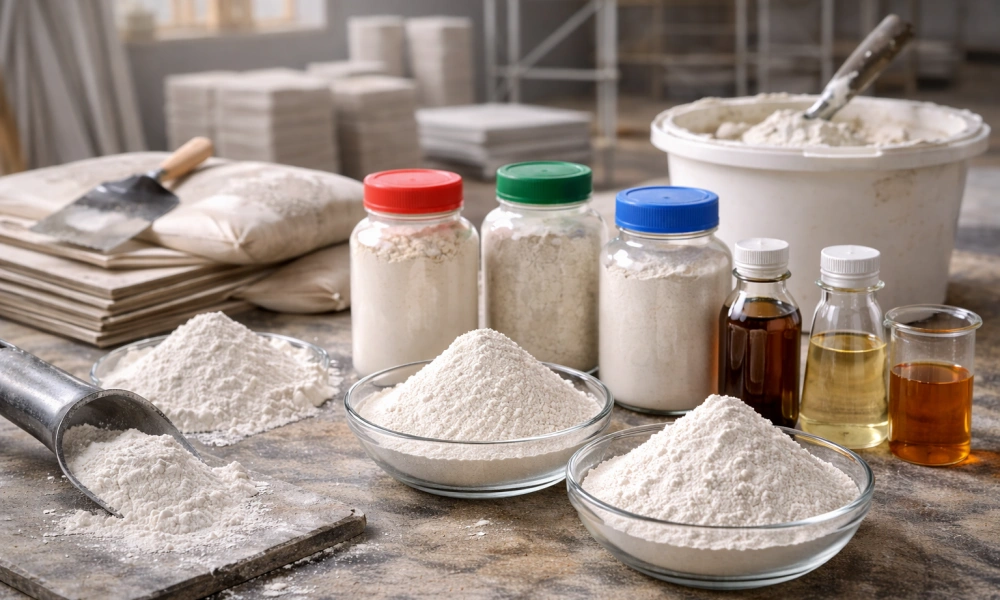
What a gypsum retarder does in practice
How it works
Building gypsum hardens as hemihydrate gypsum converts to dihydrate gypsum crystals. Retarders delay this process by one or more mechanisms:
- Reducing the dissolution rate of hemihydrate gypsum
- Adsorbing onto crystal surfaces to slow crystal growth
- Complexing ions near the crystals to limit growth kinetics
Which Myield grade should you start with
Use this quick selection logic before running trials:
- GRATARD™ GR-50G — General-purpose and cost-effective set control for standard gypsum plaster and putty.
- GRATARD™ GR-02P — Protein-based option for balanced performance when you want stable working time and good surface finish.
- GRATARD™ GR-07A — Modified amino-acid option for higher efficiency at low dosage and more consistent control when gypsum sources vary.
Key advantages linked to real use cases
A well-matched retarder should control set time without sacrificing strength development or surface quality. In practice, customers often choose different grades based on the main risk they want to avoid:
- Variable gypsum sources and seasonal shifts: Start with GR-07A to keep set control more consistent at low dosage.
- Need a balanced feel and finish for building gypsum: Consider GR-02P for stable open time and smooth finishing.
- Standard products with tight cost targets: Use GR-50G as a reliable baseline and fine-tune dosage by trial.
Typical applications
- Gypsum plaster (hand-applied and machine-sprayed)
- Gypsum putty and fillers
- Gypsum self-leveling compounds
- Bonding gypsum and gypsum-based repair materials
- Gypsum decorative elements and prefabricated gypsum components
Dosage and trial tips
Dosage depends on gypsum type, temperature, water ratio, and target setting time. As a practical starting point, many gypsum systems use roughly 0.02%–0.35% retarder by gypsum weight. Always start low and adjust upward based on trials.
To make trials faster and more repeatable:
- Keep the water-to-gypsum ratio fixed while you adjust retarder dosage
- Record initial set and final set, plus early strength and surface finish
- Test with your full formula (fillers, cellulose ether, starch ether, etc.) because they can shift setting behavior
What to share for a fast recommendation
If you send these three inputs, Myield can suggest the best starting grade and a simple trial plan:
- Gypsum source (FGD gypsum, phosphogypsum, or natural gypsum)
- Target setting window (minutes) and application method (manual or machine spray)
- Product type (plaster, putty, self-leveling, board, decorative/prefab)
With the right grade selection and a short trial loop, you can achieve predictable set control and smoother gypsum application while minimizing waste.