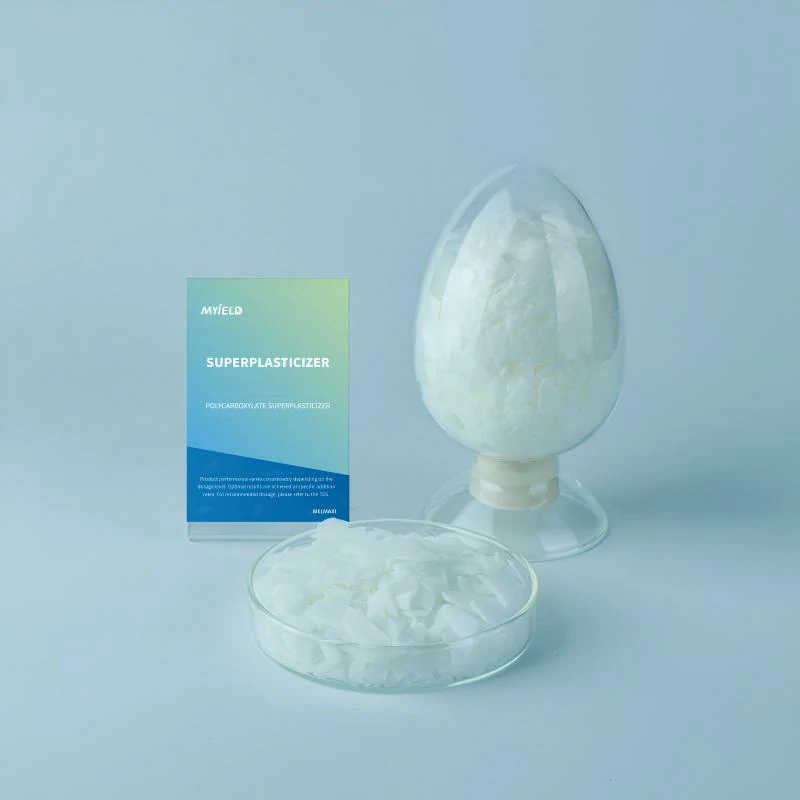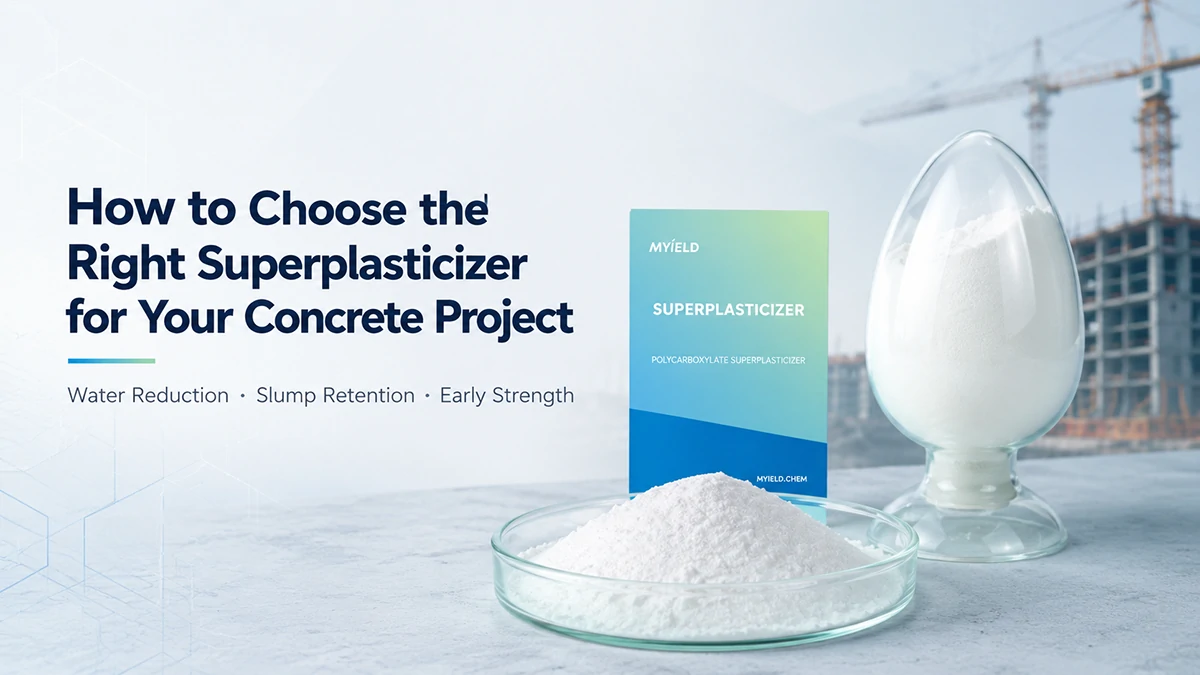












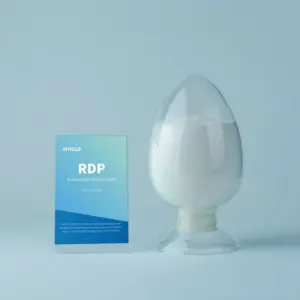
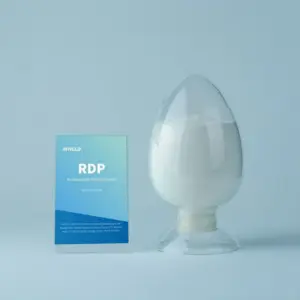
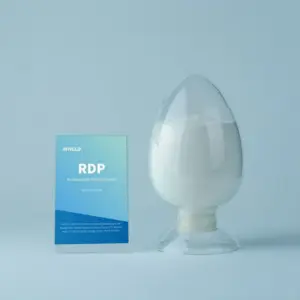
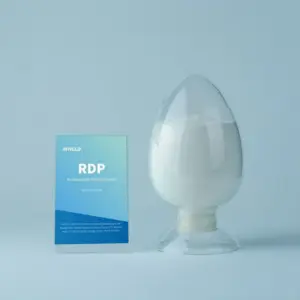











Concrete superplasticizers play an essential role in modern construction by improving workability, reducing water consumption, and supporting high-performance concrete production. Whether used in ready-mix concrete, precast components, or high-strength structures, selecting the right superplasticizer can significantly influence concrete quality and construction efficiency.
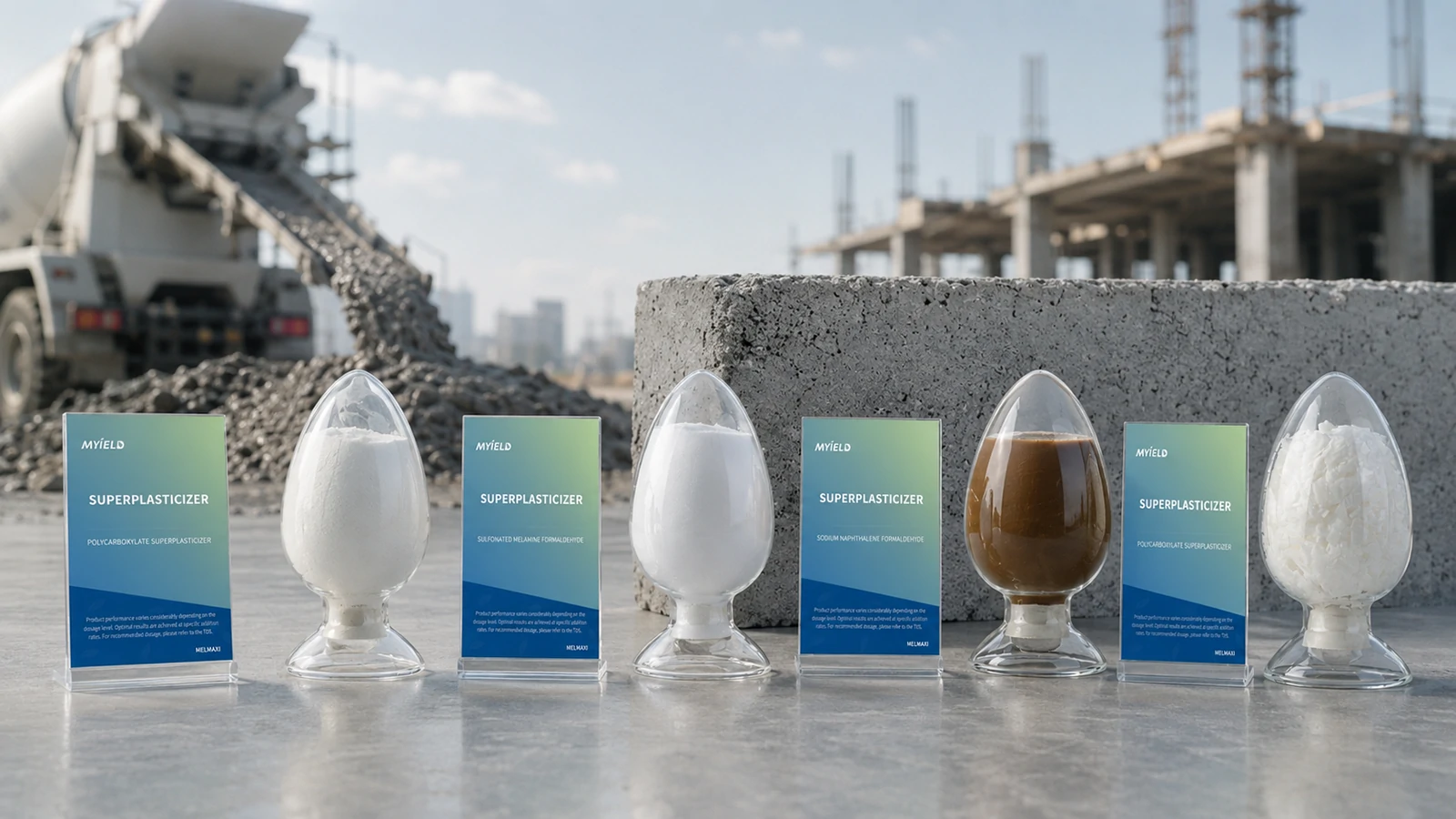
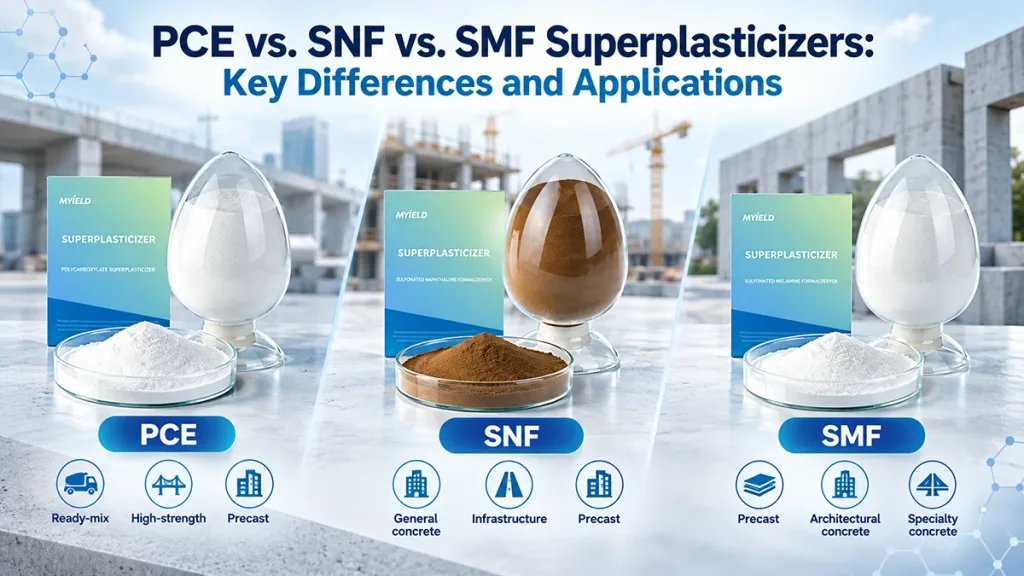
Among the most commonly used types are Polycarboxylate Ether (PCE), Sulfonated Naphthalene Formaldehyde (SNF), and Sulfonated Melamine Formaldehyde (SMF). Understanding their differences is important for choosing the most suitable solution for specific concrete applications.
What Is a Superplasticizer and How Does It Work?
A superplasticizer is a high-range water-reducing admixture designed to improve concrete fluidity without increasing the mixing water.
When cement is mixed with water, cement particles tend to form clusters, trapping water and reducing workability. Superplasticizers disperse these particles through electrostatic repulsion, steric hindrance, or a combination of both.
This dispersion releases trapped water and allows concrete to flow more easily while maintaining a lower water-to-cement ratio.
As a result, superplasticizers can help improve concrete strength, workability, and durability when properly incorporated into an optimized mix design.
Three Main Types of Concrete Superplasticizers
1. PCE Superplasticizer
Polycarboxylate Ether (PCE) is widely used in modern high-performance concrete. Its advanced molecular structure provides efficient cement dispersion through steric hindrance.
Key Advantages:
- High water-reduction efficiency.
- Excellent concrete flowability.
- Adjustable slump retention performance.
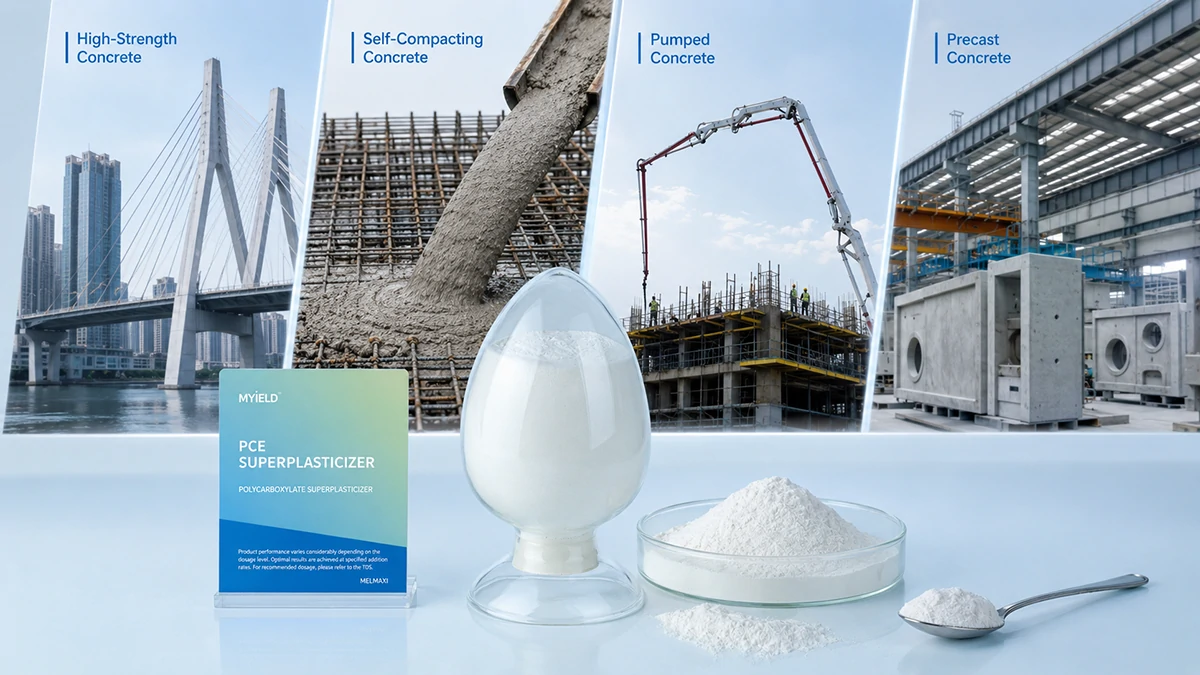
- Suitable for high-strength and self-compacting concrete.
PCE superplasticizers are particularly useful for ready-mix concrete, precast components, and projects requiring extended transportation or placement times.
2. SNF Superplasticizer
Sulfonated Naphthalene Formaldehyde (SNF) is a traditional high-range water reducer that improves cement particle dispersion primarily through electrostatic repulsion.
Key Advantages:
- Effective water reduction.
- Improved concrete workability.
- Support for compressive strength development.
- Practical performance for cost-sensitive formulations.
SNF is commonly used in conventional concrete, precast products, and pumped concrete where reliable dispersion and cost efficiency are important.
3. SMF Superplasticizer
Sulfonated Melamine Formaldehyde (SMF) is a high-range water reducer commonly used in specialized cementitious formulations.
Key Advantages:
- Effective cement dispersion.
- Improved mixture fluidity.
- Support for early strength development under suitable conditions.
- Suitable for selected precast concrete and specialty grout applications.
SMF is particularly useful where controlled flowability and specific formulation characteristics are required.
PCE vs. SNF vs. SMF: Key Differences
| Feature | PCE | SNF | SMF |
| Main mechanism | Steric hindrance | Electrostatic repulsion | Electrostatic repulsion |
| Water reduction | Generally high | Effective | Effective |
| Slump retention | Can be tailored | Often more limited | Grade-dependent |
| Typical applications | Ready-mix, SCC, high-strength concrete | Conventional, pumped, precast concrete | Precast, grouts, specialty concrete |
While PCE is often preferred for demanding concrete applications, SNF and SMF remain valuable alternatives depending on performance requirements, cement compatibility, and formulation costs.
Key Benefits of Superplasticizers in Concrete
The proper use of superplasticizers offers several important advantages:
Improved Workability: Enhances concrete flowability, making mixing, pumping, and placement easier.
Reduced Water Demand: Allows concrete manufacturers to achieve the required consistency with less mixing water.
Higher Strength Potential: Supports improved compressive strength by enabling a lower water-to-cement ratio.
Better Slump Retention: Specially designed grades help maintain concrete workability during transportation and placement.
Enhanced Durability: Proper water reduction can contribute to a denser concrete structure with lower permeability.
These advantages make superplasticizers important additives for ready-mix concrete, precast production, self-compacting concrete, and high-performance construction projects.
Powder vs. Liquid Superplasticizer: Which Is Better?
Superplasticizers are available in both powder and liquid forms to meet different manufacturing requirements.
Powder Superplasticizers are particularly suitable for dry-mix formulations, concentrated admixture preparation, and applications where reducing transportation of water is advantageous.
Liquid Superplasticizers are commonly preferred in ready-mix concrete plants because they can be conveniently incorporated through automated dosing systems.
Neither form is universally superior. The best choice depends on production equipment, product concentration, transportation conditions, and application requirements.
How to Choose the Right Superplasticizer
Choosing a suitable superplasticizer requires evaluating several factors:
- Concrete Application: Ready-mix, precast, self-compacting, or high-strength concrete.
- Performance Requirements: Target water reduction, flowability, slump retention, and strength.
- Cement Compatibility: Cement composition and other admixtures can influence performance.
- Dosage Optimization: Laboratory trials help determine an effective dosage and prevent overuse.
- Product Form: Powder or liquid, depending on production and handling requirements.
Testing under actual production conditions is essential to ensure consistent concrete performance.
Looking for the Right Superplasticizer for Your Concrete?
Struggling with rapid slump loss, insufficient concrete flowability, high water consumption, or inconsistent strength?
The problem may not be your cement or aggregates—it could be that your current superplasticizer is not the right match for your concrete formulation.
At Botai Chemical, we supply PCE, SNF, and SMF superplasticizers for different concrete applications, with solutions tailored to specific performance requirements.
Not sure which superplasticizer best suits your project? Tell us your concrete application, cement type, required performance, and estimated purchase quantity.
Our team can help you identify a suitable product grade and provide technical data sheets, product recommendations, and sample evaluation support.
Contact Myield Chemical Today
- Email: [email protected]
- WhatsApp: +86 19900925762
Send us your concrete requirements today and discover which superplasticizer could improve your mix performance.