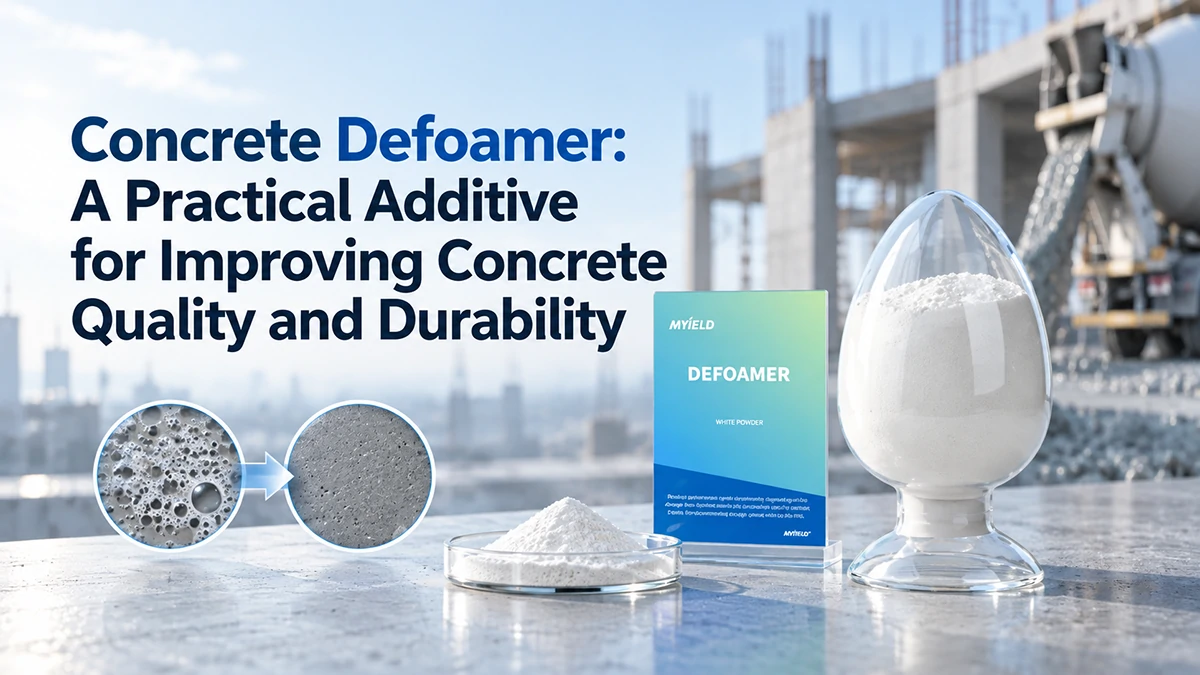







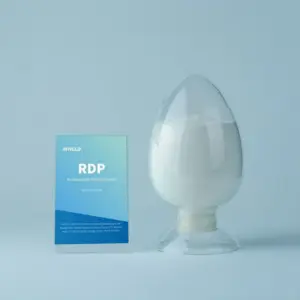
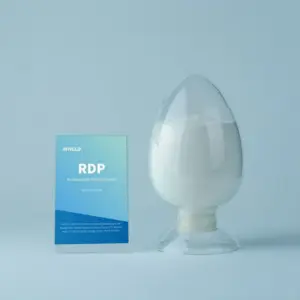
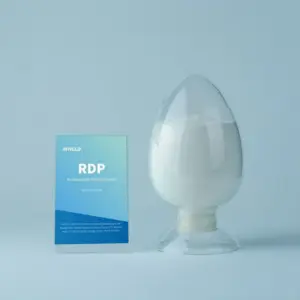
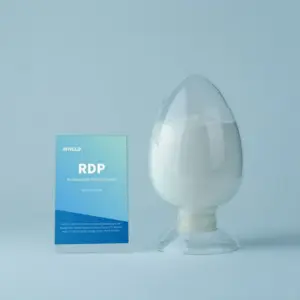








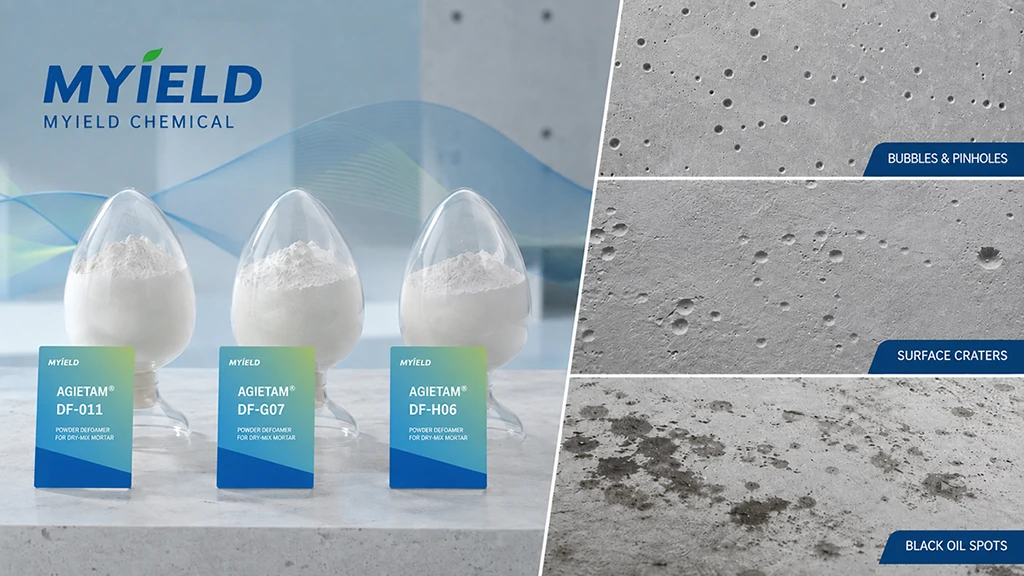
Air bubbles, pinholes, surface craters, and black oil spots usually indicate that the formulation does not have sufficient or properly matched foam control.
During the production of cement-based mortar, gypsum products, self-leveling compounds, and grouting materials, mechanical mixing and surface-active additives can introduce or stabilize unwanted air. Without an effective powder defoamer, these bubbles may remain in the slurry and negatively affect density, surface appearance, workability, and finished-product consistency.
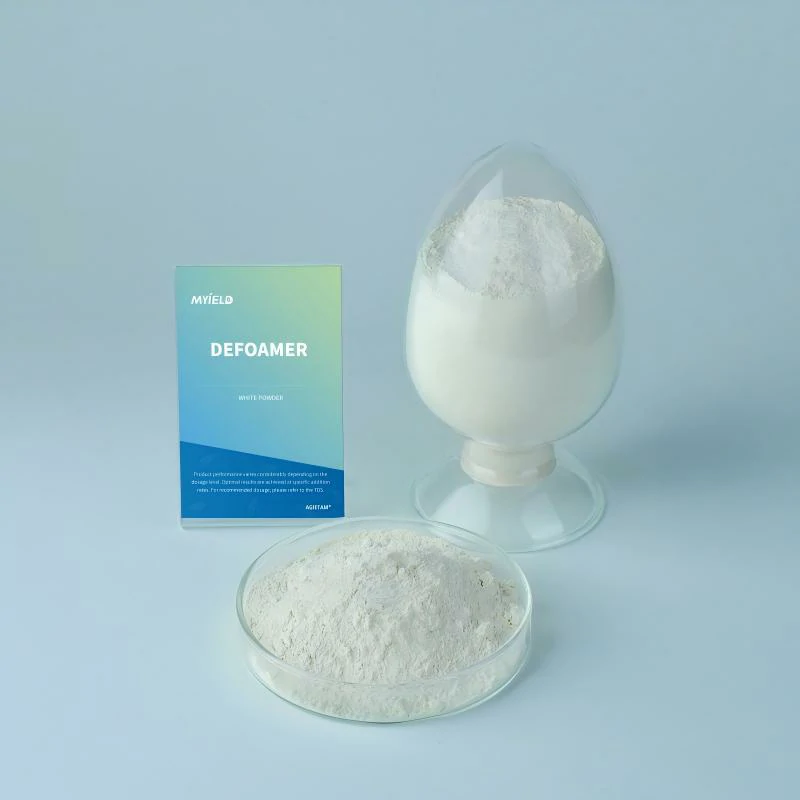
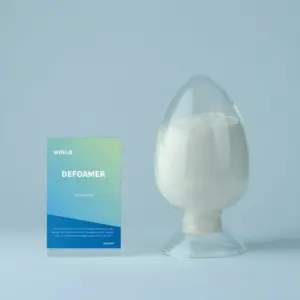
The AGIETAM® powder defoamer series from Myield Chemical provides targeted foam-control solutions for different construction material formulations.
How Does a Powder Defoamer Work?
Air bubbles in mortar are surrounded by a thin liquid film stabilized by surfactants and other formulation ingredients. A powder defoamer disperses after water is added and interferes with the stability of this film.
The bubble walls become weaker, smaller bubbles combine, and the trapped air is released from the slurry.
An effective construction defoamer should therefore provide more than immediate foam destruction. It should also:
- Disperse evenly in the wet mixture
- Work at a relatively low dosage
- Remain compatible with other mortar additives
- Reduce floating oil and surface defects
- Maintain performance during mixing and application
- Avoid negatively affecting flow and workability
For dry-mix manufacturers, a powder defoamer can be pre-blended with cement, gypsum, fillers, cellulose ethers, redispersible polymer powder, and other solid ingredients, supporting more consistent industrial production.
What Affects Defoaming Performance?
The same defoamer may perform differently in different formulations. Its effectiveness can be influenced by several factors.
Binder system
Portland cement, calcium sulfoaluminate cement, gypsum, and composite binders have different alkalinity, reaction mechanisms, and air-retention behavior.
Other additives
Cellulose ethers, wetting agents, polymer powders, water reducers, retarders, and surfactants may introduce or stabilize additional air. Their type and dosage can change the required defoamer level.
Mixing conditions
High-speed mixing, long mixing times, and different mixer designs may increase the amount of entrapped air.
Temperature
Low temperatures can affect additive dispersion, slurry viscosity, and bubble-release speed. A grade designed for low-temperature performance may therefore be required.
Water demand and slurry viscosity
Highly viscous systems usually release air more slowly. Self-leveling compounds and high-polymer mortars may require stronger or faster foam-control performance.
Surface-quality requirements
A general-purpose masonry mortar and a smooth self-leveling floor do not have the same surface standard. Products requiring a fine, uniform finish need more precise defoamer selection.
What Technical Evidence Supports the AGIETAM® Series?
The three AGIETAM® grades are designed for different formulation priorities rather than being identical products under different model numbers.
AGIETAM® DF-011 provides both rapid and long-term defoaming performance. It also offers wetting properties, helps improve slurry fluidity, reduces floating-oil defects, and remains effective at low addition levels. Its free-flowing powder form is easy to disperse during dry-mix production.
Its recommended dosage is generally 0.05%-0.20% of the total dry-mix weight, equivalent to approximately 500-2,000 grams per metric ton.
AGIETAM® DF-G07 is developed for neutral and alkaline construction material systems. It can improve slurry density, reduce floating-oil problems, and maintain good compatibility with commonly used construction additives. It is especially suitable for defoaming under low-temperature conditions.
The recommended addition level for DF-G07 is generally 0.10%-0.20% of the total mortar weight.
AGIETAM® DF-H06 rapidly removes bubbles introduced by mechanical mixing or chemical reactions. Under suitable formulation conditions, the defoaming process can generally be completed within approximately 40-90 seconds after mortar mixing. It also helps eliminate black oil spots and is particularly suitable for products with demanding surface-quality requirements.
Its typical recommended dosage is approximately 0.10%-0.20%, with further adjustment possible according to the required defoaming performance and surface condition.
How Can You Reduce Foam and Improve Surface Quality?
The most effective solution is not simply to increase the amount of any available defoamer. The defoamer should be matched to the formulation, production environment, and finished-product requirements.
A practical formulation process includes:
- Select a grade according to the binder and application.
- Pre-blend the defoamer evenly with the dry ingredients.
- Begin testing within the recommended dosage range.
- Keep the water ratio and mixing procedure consistent.
- Compare slurry density, flow, and bubble-release speed.
- Check the surface for pinholes, craters, floating oil, and black spots.
- Confirm strength, adhesion, and final appearance after curing.
- Verify the selected dosage through production-scale trials.
Using too little defoamer may leave visible bubbles and surface defects. Excessive addition may increase formulation costs or affect the balance of the system. Laboratory testing is therefore essential for determining the optimum dosage.
Which AGIETAM® Defoamer Should You Choose?
Choose AGIETAM® DF-011 for versatile applications
DF-011 is recommended when you need a broadly applicable powder defoamer with rapid and lasting foam control.
Typical applications include:
- Self-leveling compounds
- Grouting materials
- Repair mortars
- UHPC
- Gypsum flooring compounds
- Artificial stone
- Cement and gypsum boards
- Gypsum molds and prefabricated products
It is also suitable when improved wetting, slurry flow, low-dosage efficiency, and reduced floating oil are important.
Choose AGIETAM® DF-G07 for low-temperature or alkaline systems
DF-G07 is recommended for neutral and alkaline formulations that require stable foam control and good compatibility with other construction additives.
Typical applications include:
- Waterproof mortar
- Decorative mortar
- Self-leveling cement
- Cementitious grout
- Tile grout and caulking compounds
- Interior and exterior putty
- Gypsum prefabricated boards
It is particularly valuable when production or application takes place under lower-temperature conditions.
Choose AGIETAM® DF-H06 for surface-critical products
DF-H06 is recommended when rapid bubble release and final surface appearance are the main formulation priorities.
Typical applications include:
- Surface self-leveling compounds
- Cementitious grout
- Interior and exterior putty
- Bonding mortar
- Gypsum plaster
- Waterproof mortar
- Decorative mortar
- Cement and gypsum prefabricated components
Its fast defoaming performance and ability to reduce black oil spots make it suitable for products requiring a cleaner and more uniform finish.
Get the Right Defoamer for Your Formulation
Unwanted air does more than create visible bubbles. It can reduce slurry density, produce surface defects, increase batch variation, and affect customer acceptance of the finished product.
Myield Chemical supplies differentiated powder defoamer solutions for cement-based mortar, gypsum systems, self-leveling compounds, waterproof materials, grouts, putties, decorative mortars, and prefabricated building products.
Our team can support customers with:
- Product-grade recommendations
- Technical data and safety documents
- Sample testing
- Dosage optimization
- Formulation compatibility evaluation
- Application and technical support
Contact Myield Chemical and provide your application, binder system, existing additives, operating temperature, and required surface standard. We will help you select a suitable AGIETAM® powder defoamer for your formulation.
Henan Mingya Chemical Technology Co., Ltd.
Email: [email protected]
WhatsApp: +86-18538509097